Clip-on earbuds have moved from a niche accessory to one of the fastest growing shapes in wireless audio. Instead of sealing the ear canal like a normal pair of TWS buds, a clip-on model wraps a flexible bridge around the outer ear and rests the driver just outside the canal. The result is comfort that lasts for hours, full awareness of traffic and conversations around you, and a listening experience that trades deep bass and isolation for something closer to background sound. Brands like Bose, Sony, Shokz, Huawei, EarFun and SoundPEATS have all released their own version of the format in the past two years, and the differences between them are bigger than the shape suggests. Below is every model worth knowing about in 2026, ranked by category, with specs, pricing, and the strengths and weaknesses that separate a good pair from an average one.
Quick picks: the best clip-on earbuds by category
| Category | Pick | Price |
|---|---|---|
| Best overall | Huawei FreeClip 2 | $199.99 |
| Best for iPhone | Sony LinkBuds Clip | $229.99 |
| Best for workouts | Soundcore AeroClip | $149.99 |
| Best for battery life | Shokz OpenDots ONE | $199.95 |
| Best premium pick | Bose Ultra Open | $299 |
| Best budget overall | SoundPEATS UU2 | $49.99 |
| Best for phone calls | EarFun Clip 2 | $79.99 |
| Best with Dolby Audio | SoundPEATS Clip1 | $69.99 |
| Best under $40 | SoundPEATS PearlClip Pro | $39.98 |
| Best real buttons alternative | Baseus Bowie MC2 | ~$50-60 |
What are clip-on earbuds?
Clip-on earbuds are a type of open-ear audio built around a flexible bridge, usually made from nickel-titanium or memory metal wire, that pinches gently around the outer ear. A small speaker sits at the front, near the entrance of the ear canal but never inside it, while a slightly heavier counterweight sits behind the ear to balance the fit. Unlike wired-style hooks that loop over the top of the ear, or bone conduction models that vibrate against the skull, a clip-on pair relies purely on gentle clamping pressure to stay put. That difference in mechanism is what separates clip-on earbuds from the wider open-ear category, and it is why the fit feels different from both a bone conduction headset and a traditional hook-style earbud.
How clip-on earbuds differ from ear-hook and bone-conduction designs
Ear-hook earbuds loop a rigid or semi-rigid arm over the top of the ear and down the back, which works well for running but can clash with glasses arms and thick hair. Bone conduction headsets, the format Shokz built its name on, skip the ear canal entirely and send sound through vibrations in the cheekbone, which means voices and calls sound clear but music loses detail in the low end. Clip-on earbuds sit in between the two. They avoid the glasses conflict that hooks create, and they deliver actual driver-based sound instead of vibration, which most listeners find closer to a normal earbud than bone conduction ever gets.
Who clip-on earbuds are for
Runners and cyclists who need to hear traffic, office workers who want to stay aware of a ringing desk phone or a colleague walking up, and anyone who finds silicone tips physically uncomfortable after long wear are the core audience for this format. Glasses wearers in particular benefit, since the bridge sits on the ear without competing for space with a temple arm the way hooks do.
What you give up with an open design
There is no getting around the trade-off. Without a seal against the ear canal, there is no pressure chamber to reinforce low frequencies, so bass below roughly 80Hz rolls off no matter how good the driver is. None of the models below offer active noise cancellation either, and passive isolation is close to zero, so a loud train platform or a busy street will compete directly with whatever is playing. If isolation and deep bass are non-negotiable, a sealed in-ear or an ANC headphone will always outperform a clip-on pair.
Best overall clip-on earbuds: Huawei FreeClip 2
The Huawei FreeClip 2 remains the most complete pair in this format. Each earbud is interchangeable between ears, and so are the case slots, which removes the usual left and right guesswork.
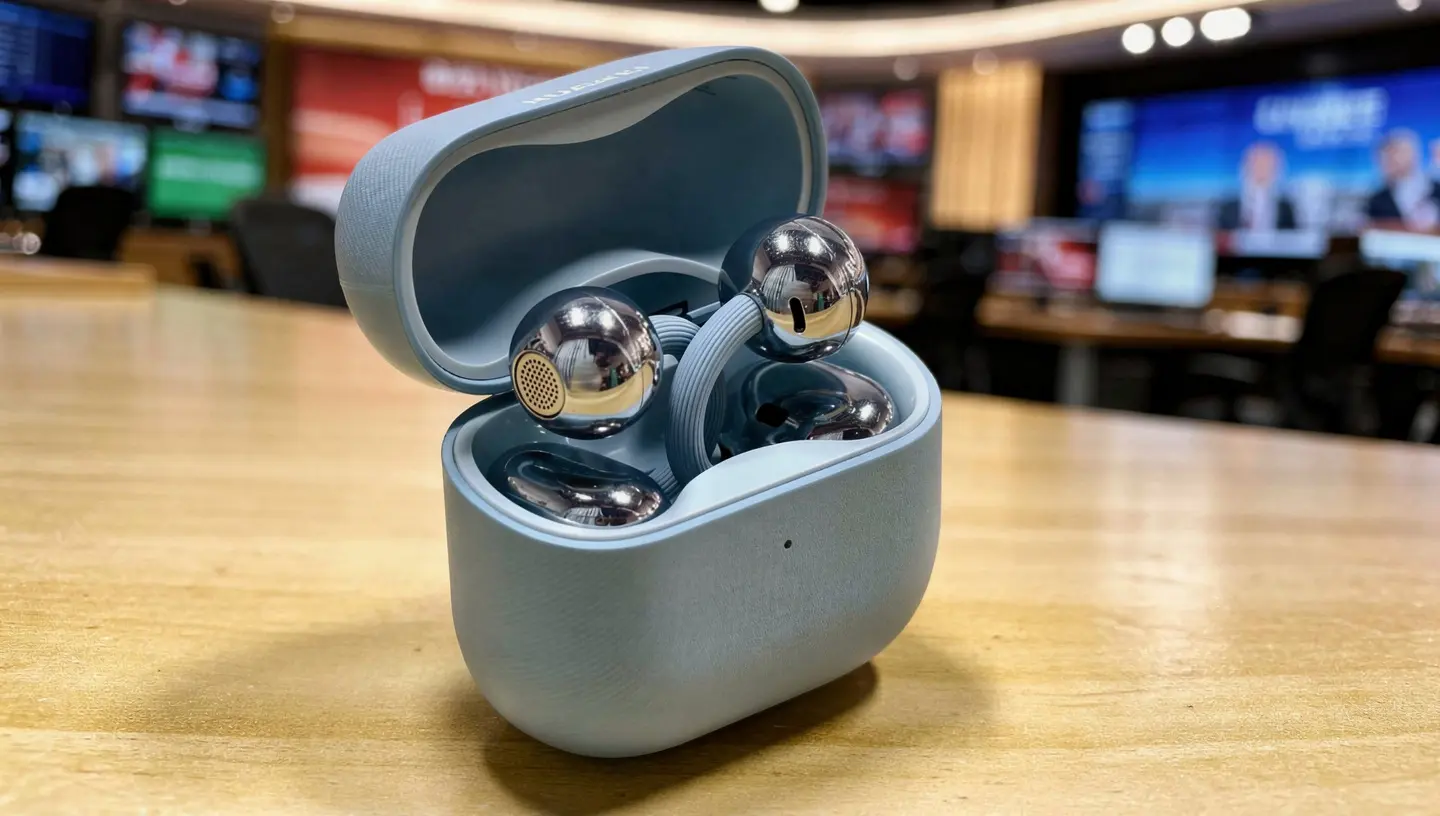
The reflective-metal driver housing paired with a fabric bridge feels more refined in hand than most competitors, and the HUAWEI Audio app adds head-gesture call controls along with a proper 10-band EQ. Bass output beats most rivals for an open design, though the lack of LDAC is a real gap at this price, especially since several cheaper clip-on earbuds below include it.
| Spec | Detail |
|---|---|
| Price | $199.99 |
| Driver | Reflective-metal driver |
| Weight | 5.9g per earbud |
| Codec | SBC, AAC |
| Battery | 9h per earbud, 38h total |
| IP rating | IP57 earbuds, IP54 case |
| Controls | Touch |
Pros
- Fully interchangeable earbuds and case slots, no left or right to sort out
- Strongest bass output among open-ear clip-ons at this tier
- IP57 rating, among the most water and dust resistant in the category
- Deep app customization with head-gesture calling
Cons
- No LDAC despite the premium price
- Microphone struggles to filter background noise on calls
- $199.99 is a hard sell against cheaper options with similar output
Best clip-on earbuds for iPhone: Sony LinkBuds Clip
Sony brings its usual software depth to the Sony LinkBuds Clip. The Sound Connect app includes three listening modes, a personalization tool that maps out a custom EQ, and 360 Reality Audio, all of which work the same way on iOS as they do on Android. Sound quality edges out most rivals in independent testing, and the glossy, low-profile shape looks closer to jewelry than tech.
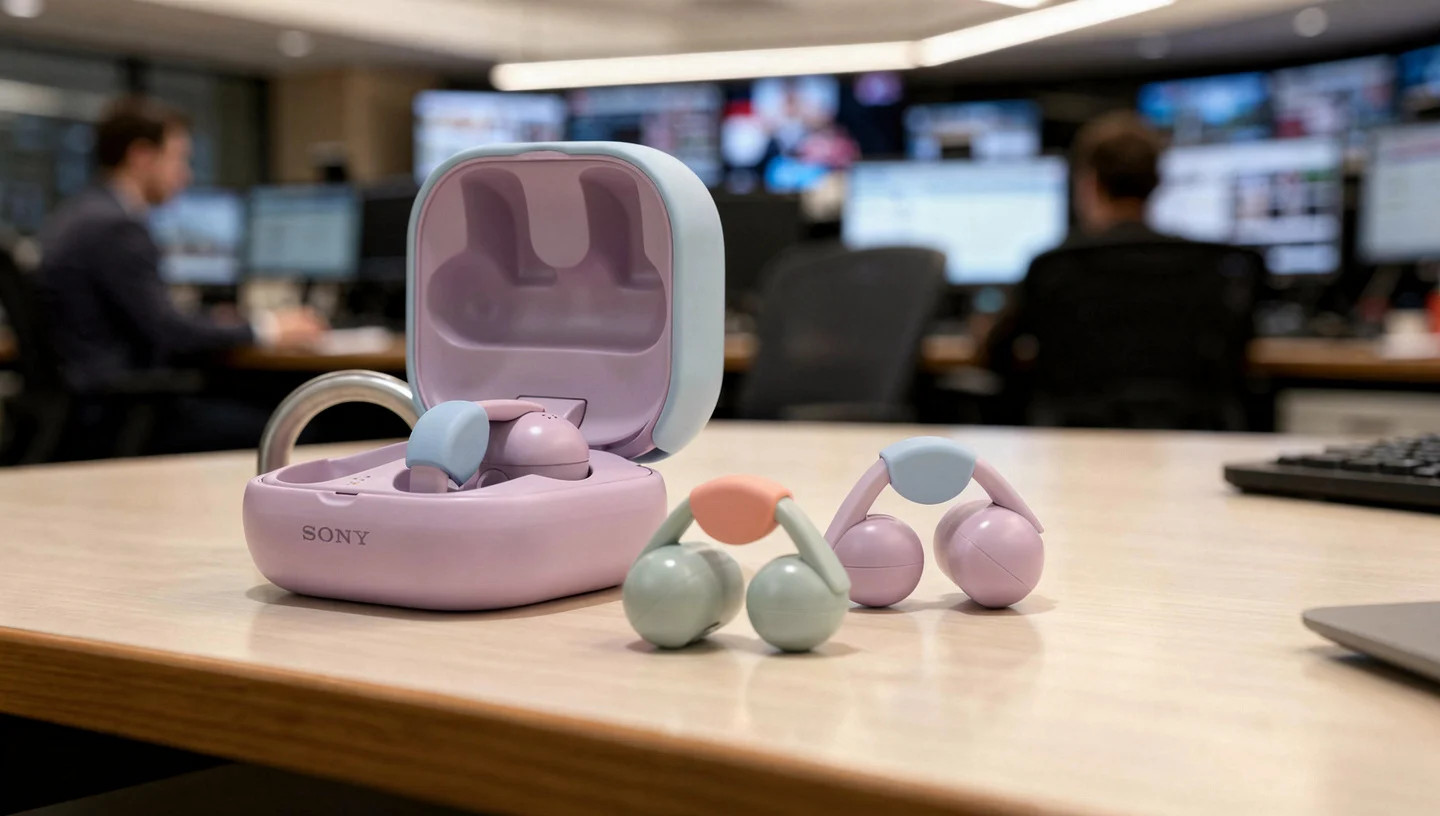
The trade-off is a battery figure that measured shorter than Sony’s own claim in outside testing, and a band some reviewers found needed extra silicone grips to stay secure through a full day, a common complaint with lighter clip-on earbuds in general.
| Spec | Detail |
|---|---|
| Price | $229.99 |
| Codec | SBC, AAC |
| Battery | 7h10m measured, up to 9h claimed, 28-37h total |
| IP rating | IPX4 |
| Controls | Touch |
Pros
- Deepest companion app in the category, works fully on iOS and Android
- Strong sound quality for an open design
- Low-profile look with optional case skins
- Sound Leakage Reduction mode genuinely cuts down on bleed
Cons
- Battery measured shorter than claimed in outside testing
- Band tension may not hold for every ear without add-on grips
- No LDAC or a higher resolution codec
Best clip-on earbuds for workouts: Soundcore AeroClip
The Soundcore AeroClip is Anker’s most complete open-ear effort so far. A 12mm titanium-coated driver with LDAC support gives it real audio credibility, and the AI live translation feature covers more than a hundred languages through the Soundcore app.
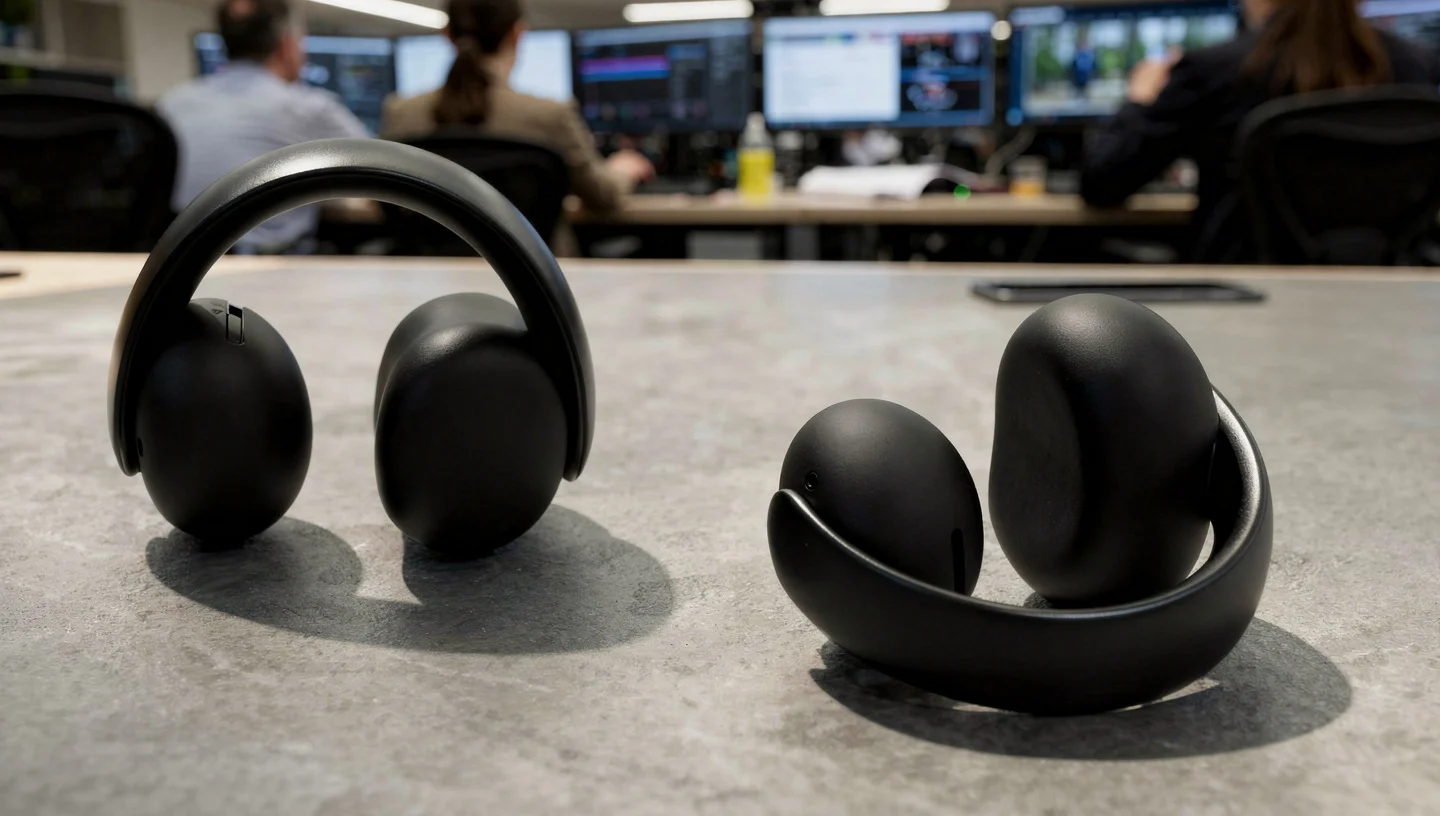
The IP55 rating and lightweight titanium-core frame make it a reasonable pick for sweaty sessions, though the default tuning leans thin and benefits noticeably from the app’s EQ presets before these clip-on earbuds sound their best.
| Spec | Detail |
|---|---|
| Price | $149.99 |
| Driver | 12mm titanium-coated |
| Weight | 5.9g per earbud |
| Codec | SBC, AAC, LDAC |
| Battery | 8h per earbud, 24h total |
| IP rating | IP55 |
| Controls | Touch |
Pros
- LDAC support at a mid-range price
- AI live translation across more than a hundred languages
- Lightweight and comfortable for long workout sessions
- Four available colorways
Cons
- Default tuning needs EQ adjustment to sound its best
- Sound leakage more noticeable than pricier rivals
- Touch controls can be slow to register
Best clip-on earbuds for battery life: Shokz OpenDots ONE
Shokz built its name on bone conduction, and the Shokz OpenDots ONE is its answer to the clip-on trend. Both earbuds are interchangeable, which removes the usual left and right fumbling mid-run, and wear detection auto-pauses playback the moment one is removed, a feature almost nothing else on this list offers.
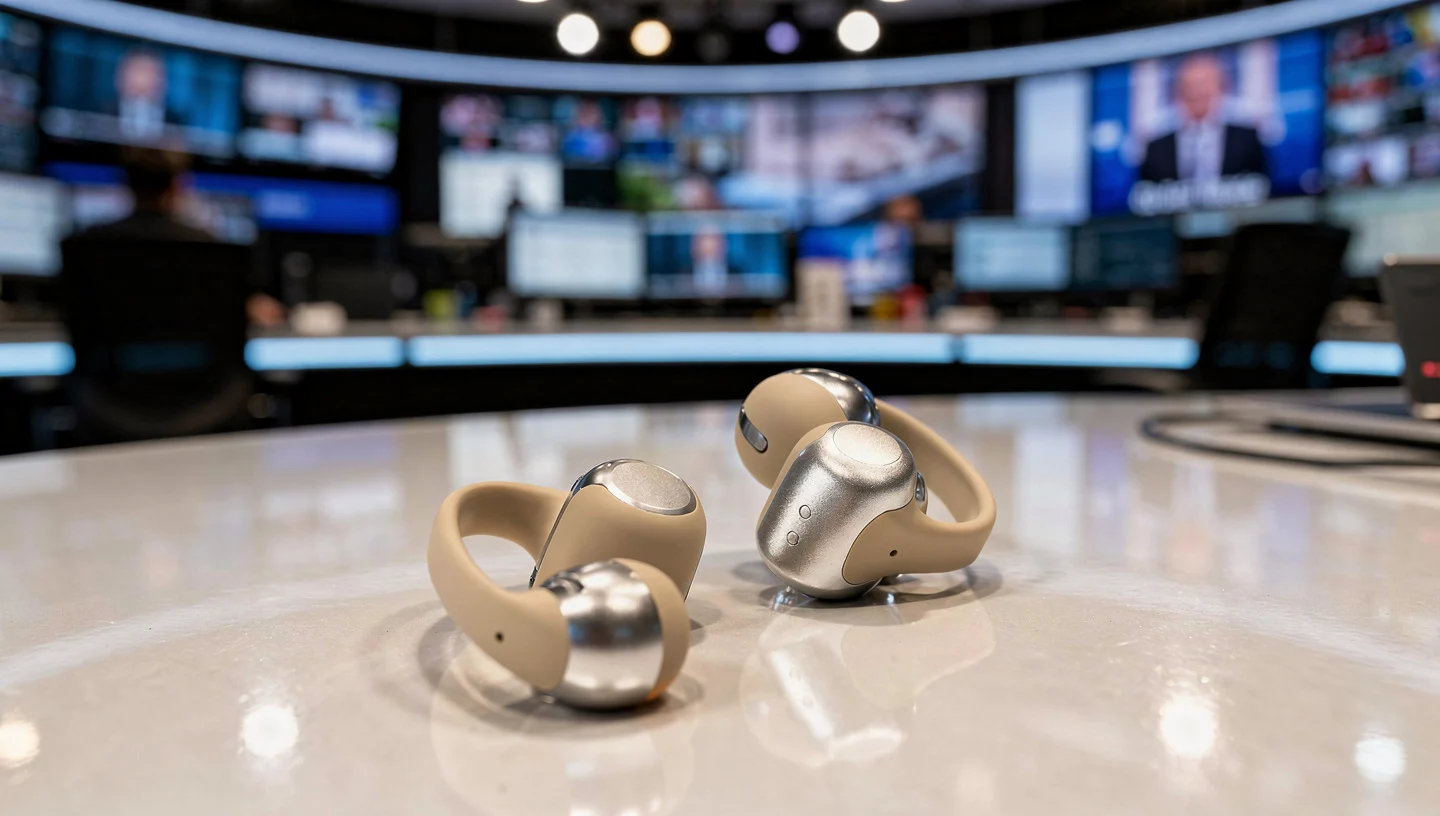
Sound quality lands close to the pricier Bose Ultra Open in outside testing, and battery life is the strongest figure in this whole roundup. Tap and pinch controls are the one complaint that shows up again and again across reviews of these clip-on earbuds.
| Spec | Detail |
|---|---|
| Price | $199.95 |
| Driver | Dual-driver air conduction |
| Weight | 6.5g per earbud |
| Codec | SBC, AAC |
| Battery | 10h per earbud, 40h total |
| IP rating | IP54 |
| Controls | Tap and pinch |
Pros
- Interchangeable earbuds, no left or right to sort out
- Wear detection auto-pauses playback, rare in this format
- Sound quality close to the Bose Ultra Open for a hundred dollars less
- Longest battery life among every model in this comparison
Cons
- Tap and pinch controls are finicky and sometimes slow
- No LDAC or a higher resolution codec
- Dolby Audio processing does not fully make up for the missing sub-bass
Best premium clip-on earbuds: Bose Ultra Open
Bose effectively started the clip-on trend, and the Bose Ultra Open still sets the bar for sound quality in the category. Physical buttons replace touch entirely, each with a customizable shortcut, and the cuff-like shape stays secure through activity without applying real pressure on the ear. According to a comparison published by SoundGuys, it remains the pick for Android users who want the most dependable sound in the format.
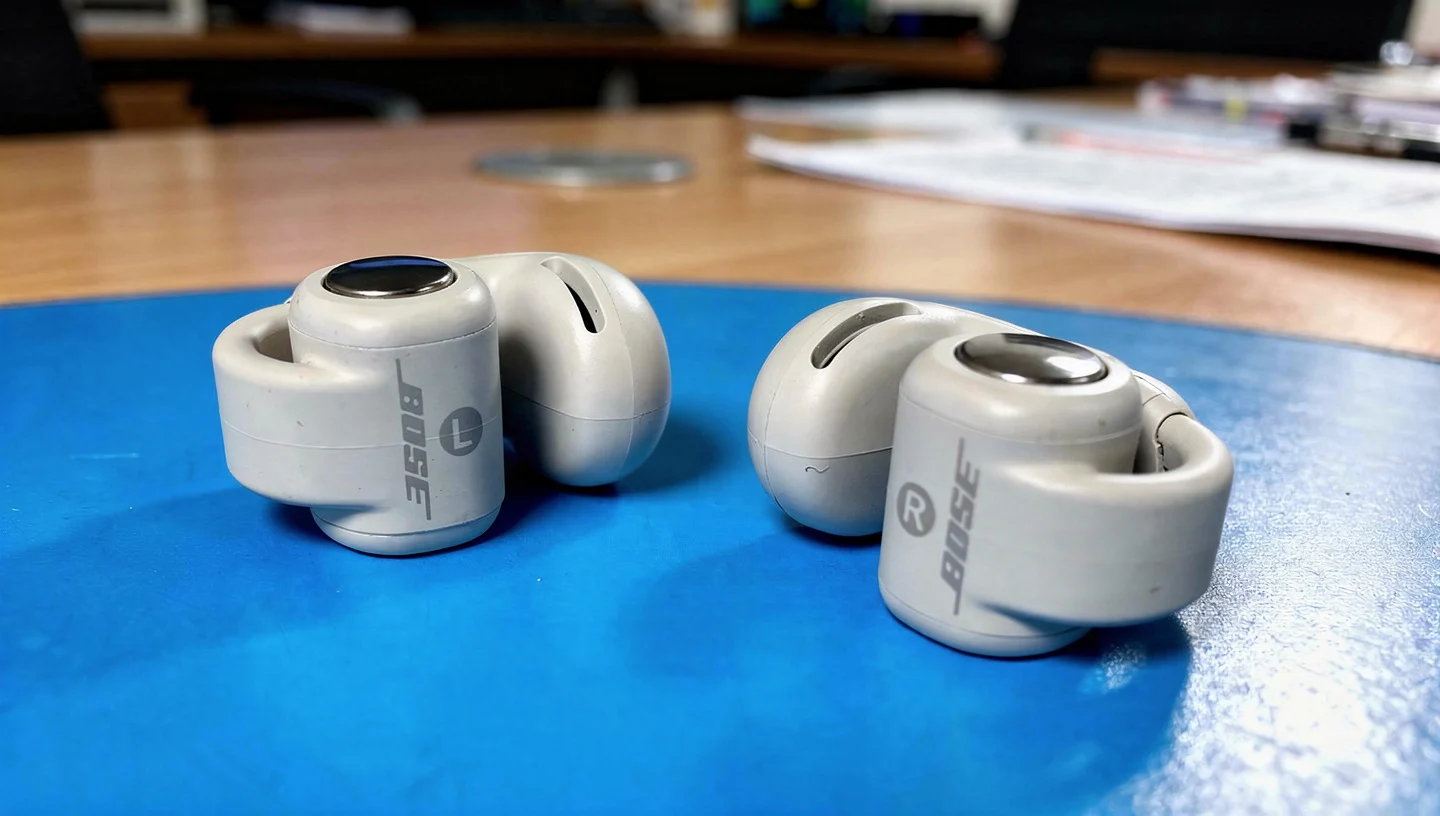
The catch is the price. At $299 it matches Bose’s own noise cancelling flagship.
| Spec | Detail |
|---|---|
| Price | $299 |
| Driver | 12mm |
| Weight | 6g per earbud |
| Codec | SBC, AAC, Snapdragon Sound, aptX Adaptive on Android |
| Battery | 7.5h per earbud, 26.5-27h total |
| IP rating | IPX4 |
| Controls | Physical buttons |
Pros
- Best sound quality of any clip-on tested by most outlets
- Physical buttons with a customizable shortcut per earbud
- Exceptionally secure fit without real pressure on the ear
- Multipoint connectivity added through a firmware update
Cons
- $299 price tag matches Bose’s own ANC flagship
- No LDAC on iOS
- Microphone struggles in loud environments
Best budget clip-on earbuds overall: SoundPEATS UU2
The SoundPEATS UU2 is the newest release in this format and undercuts nearly every comparably specced competitor on this list by a wide margin. A 12mm titanium-coated dual-magnet driver paired with DynamicEQ delivers measurably more bass than SoundPEATS’ own earlier models, and it is one of the few clip-on pairs under fifty dollars carrying both LDAC and Hi-Res Audio Wireless certification. Physical buttons avoid the misfire problems that plague touch-based rivals, and Privacy Mode measurably cuts down on sound leakage, a feature most competitors in this price range skip entirely.
| Spec | Detail |
|---|---|
| Price | $49.99 |
| Driver | 12mm titanium-coated dual-magnet |
| Weight | ~5g per earbud |
| Codec | SBC, AAC, LDAC |
| Battery | 10h claimed / ~8h measured per earbud, 42h claimed / ~22h measured total |
| IP rating | IPX5 |
| Controls | Physical buttons |
Pros
- LDAC and Hi-Res certification at a $49.99 price point
- Physical buttons, no accidental inputs during runs or sweat
- Privacy Mode reduces sound leakage, rare at this price
- Bluetooth 6.0 and measurably more bass than the brand’s earlier models
Cons
- Real world battery runs shorter than the claimed figures
- No wireless charging
- No AI translation feature
How the UU2 compares to premium clip-on earbuds above
Set next to the Huawei FreeClip 2 or the Bose Ultra Open, the UU2 does not match the polish or the microphone performance of either. What it does match, and in some cases beat, is the codec support and driver output, both usually reserved for pairs costing three to four times as much. SoundPEATS has built a track record in the budget segment, detailed further on the brand overview on this site, and the UU2 continues that pattern of putting flagship-adjacent features into a sub-fifty dollar shell.
Best clip-on earbuds for phone calls: EarFun Clip 2
The EarFun Clip 2 is the model most third-party outlets currently name as their own budget pick, and it is easy to see why. LDAC, Bluetooth 6.0, an 11 hour battery claim that measured close to accurate at 10 hours and 46 minutes, wireless charging, and a genuinely useful AI translation feature all show up at $79.99, a combination nothing else in this price bracket matches.
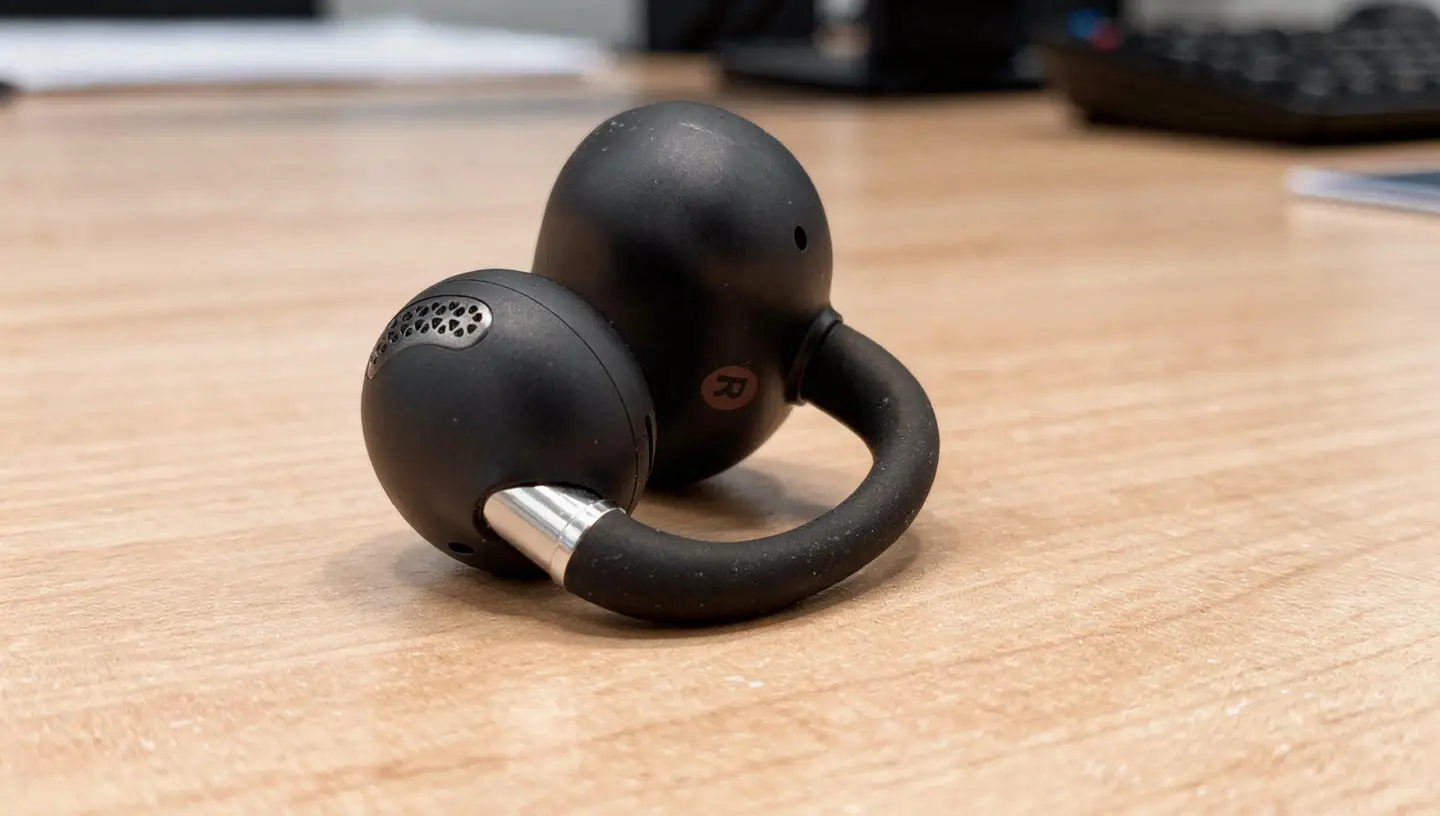
The default tuning leans bright and needs the app’s EQ to sound balanced, and iPhone owners are limited to SBC since there is no AAC support.
| Spec | Detail |
|---|---|
| Price | $79.99 |
| Driver | 12mm dual-magnetic titanium composite |
| Weight | 5.5g per earbud |
| Codec | SBC, LDAC, no AAC |
| Battery | 11h claimed / 10h46m measured per earbud, 40h total on SBC |
| IP rating | IP55 |
| Controls | Physical buttons |
Pros
- AI translation built in, genuinely functional per multiple reviewers
- Wireless charging case
- Strongest battery claim under a hundred dollars, and it holds up in testing
- Deep companion app with personalized EQ
Cons
- Default tuning is treble-forward and needs EQ work
- No AAC, iPhone users are limited to SBC
- LDAC cuts battery life roughly in half
Best clip-on earbuds with Dolby Audio: SoundPEATS Clip1
The SoundPEATS Clip1 remains the only pair from the brand with Dolby Audio, which makes it the pick specifically for video and movie watching. A review from TechRadar positioned it directly as a budget alternative to the Bose Ultra Open and Shokz OpenDots ONE, and praised the built-in listening test as one of the more effective implementations at this price.
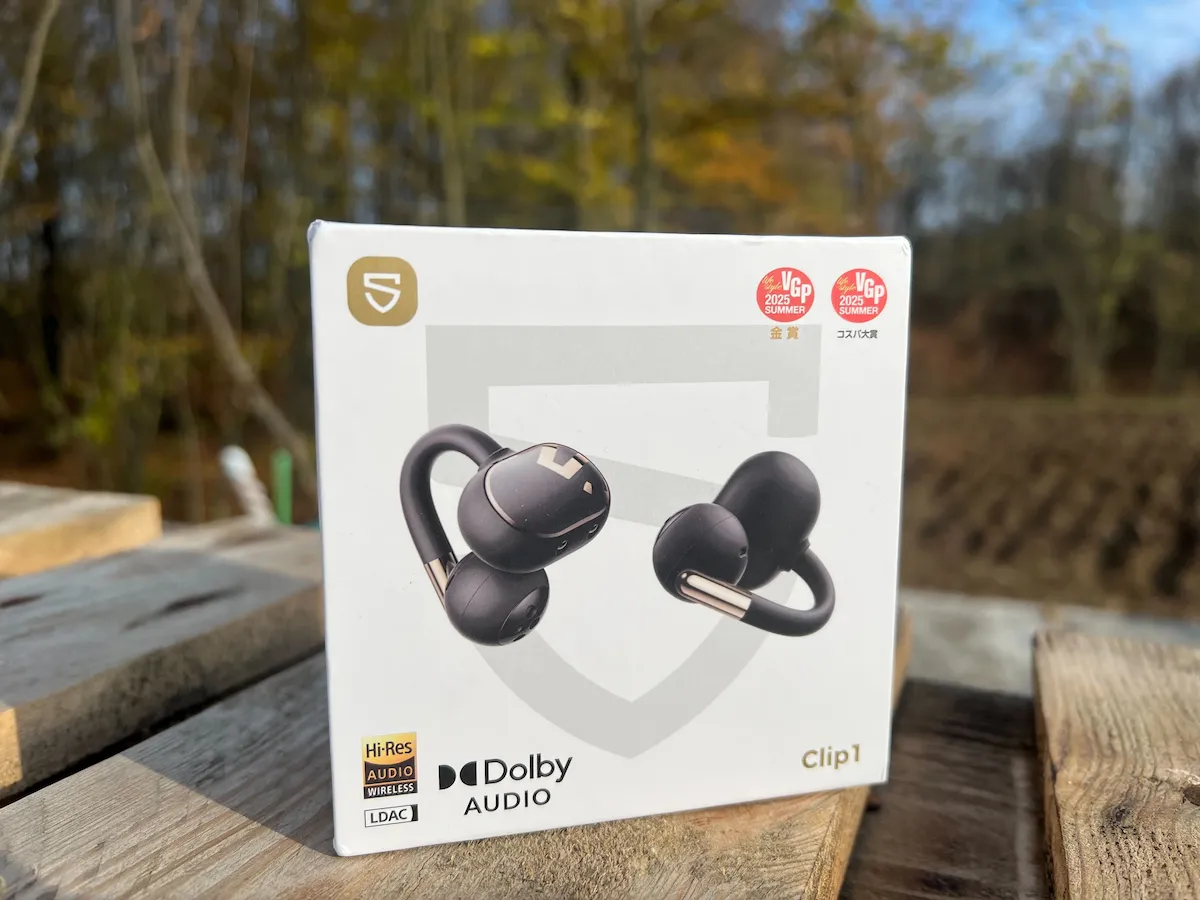
Touch controls remain the recurring weak point, both in that review and against SoundPEATS’ own newer UU2, which switched to physical buttons for that exact reason.
| Spec | Detail |
|---|---|
| Price | $69.99 |
| Driver | 12mm titanium PVD dual-magnet |
| Weight | 5g per earbud |
| Codec | SBC, AAC, LDAC |
| Battery | 8h per earbud, 40h total |
| IP rating | IPX5 |
| Controls | Touch, 3-zone |
Pros
- Dolby Audio support, unique among SoundPEATS clip-ons
- Built-in listening test for a personalized EQ
- LDAC and Hi-Res certification
- Lightweight build that holds up during workouts
Cons
- Touch controls are oversensitive, ghost touches reported by outside reviewers
- Maximum volume flagged as too low for outdoor or traffic use
- Costs more than the UU2 while offering less battery
Best entry-level clip-on earbuds: SoundPEATS PearlClip Pro
The SoundPEATS PearlClip Pro is the lowest-risk way into the format. At $39.98 it covers the basics: a 12mm dual driver, directional sound design meant to limit leakage, and AI-assisted call noise reduction.
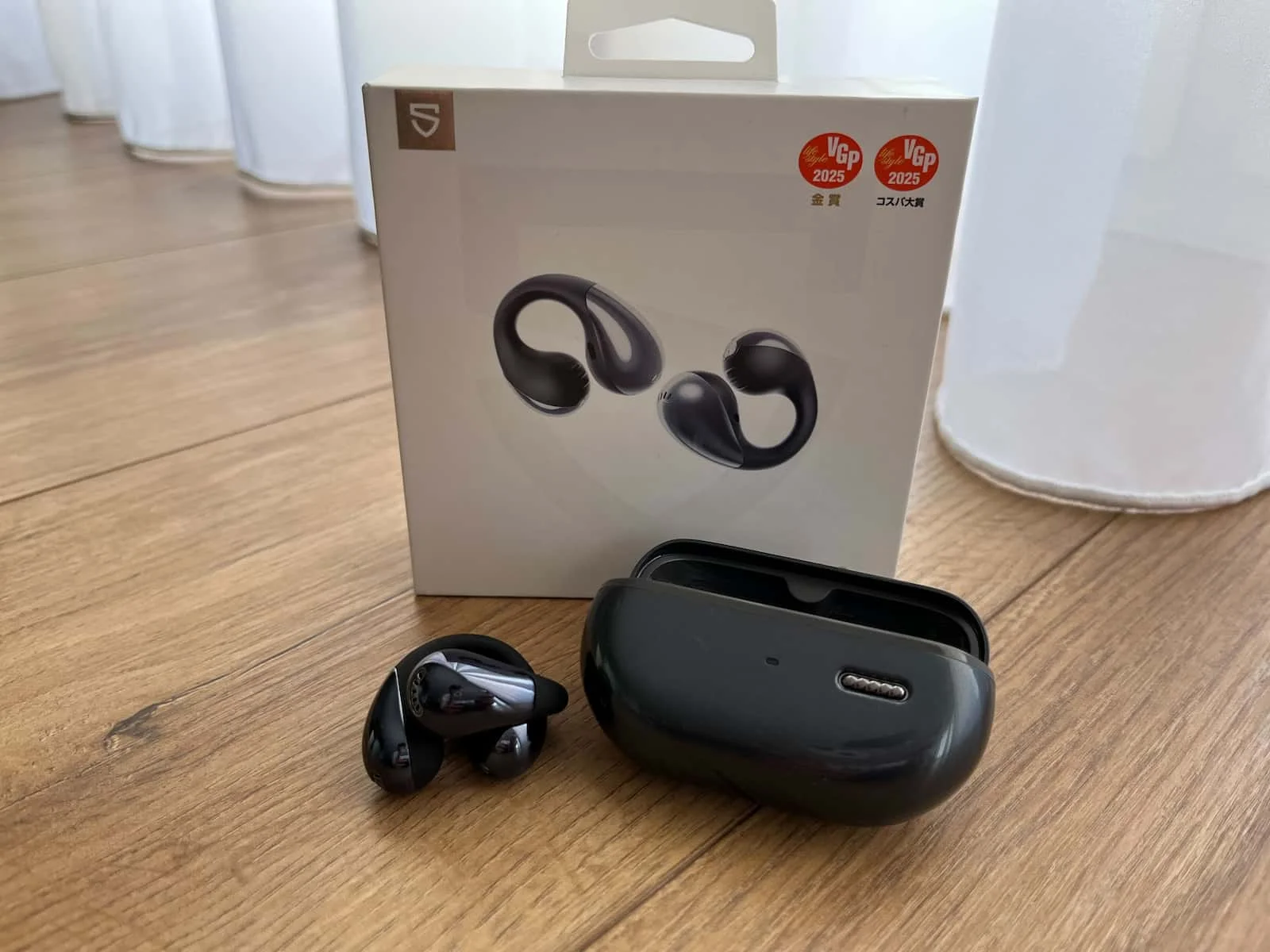
It lacks the extras that later models added, including wireless charging and a Privacy Mode, and the touch controls are more prone to accidental taps than the newer Clip1 or UU2.
| Spec | Detail |
|---|---|
| Price | $39.98 |
| Driver | 12mm dual |
| Weight | 5.85g per earbud |
| Codec | SBC, AAC |
| Battery | 6h per earbud, 24h total |
| IP rating | IPX5 |
| Controls | Touch |
Pros
- Lowest price of any tested SoundPEATS clip-on
- Comfortable, lightweight fit that holds up during runs
- Directional sound design genuinely reduces leakage
Cons
- Touch controls trigger accidentally during fit adjustments
- No memory for EQ profiles, resets to normal mode each time
- Shortest battery figure in this entire roundup
More clip-on earbuds worth considering
Baseus Inspire XC1
Made in partnership with Bose, the Baseus Inspire XC1 stands out as one of the few clip-on earbuds capable of real bass according to outside reviewers. Physical buttons, a 4-mic AI array for calls, and an IP66 rating built for dust and splash resistance round out a spec sheet aimed at athletes who want more ruggedness than most rivals offer, priced around $129.99 with LDAC support and 8 hours per earbud.
Baseus Bowie MC2
Named a top budget pick by independent testers, the Baseus Bowie MC2 stands out for bass among clip-on earbuds in its price range, described as one of the few with a full and engaging lower end. Real buttons, an IP67 rating, and roughly 11 hours of battery per earbud round out the package at around fifty to sixty dollars, though call quality does not filter background noise as well as the EarFun Clip 2.
Soundcore C50i
The Soundcore C50i replaces the widely criticized C30i and fixes most of its predecessor’s comfort issues. At $69.99 the tuning leans treble-forward and energetic, which suits workout playlists, though Bluetooth stability has been reported to dip specifically during running, and the fit clamps noticeably in the first few minutes before settling.
JLab Flex Open
The JLab Flex Open is a budget-friendly way to try the format without spending much, priced under $75. Sound quality trails the pricier picks on this list, but Google Fast Pair, multipoint, and a genuinely comprehensive companion app for the price make it a reasonable entry point for buyers who want customization from a pair of clip-on earbuds without paying for the SoundPEATS or EarFun tier.
Clip-on earbuds comparison table
Every model covered above, side by side, to make comparing specs across these clip-on earbuds easier at a glance.
| Model | Price | Driver | Codec | Battery (bud/total) | Controls | IP rating |
|---|---|---|---|---|---|---|
| Huawei FreeClip 2 | $199.99 | Reflective-metal | SBC/AAC | 9h/38h | Touch | IP57 |
| Sony LinkBuds Clip | $229.99 | N/A | SBC/AAC | 7h10m/N/A | Touch | IPX4 |
| Soundcore AeroClip | $149.99 | 12mm titanium | SBC/AAC/LDAC | 8h/24h | Touch | IP55 |
| Shokz OpenDots ONE | $199.95 | Dual-driver air conduction | SBC/AAC | 10h/40h | Tap/pinch | IP54 |
| Bose Ultra Open | $299 | 12mm | SBC/AAC/aptX Adaptive | ~7.5h/27h | Buttons | IPX4 |
| SoundPEATS UU2 | $49.99 | 12mm Ti dual-magnet | SBC/AAC/LDAC | 10h/42h | Buttons | IPX5 |
| EarFun Clip 2 | $79.99 | 12mm Ti composite | SBC/LDAC | 11h/40h | Buttons | IP55 |
| SoundPEATS Clip1 | $69.99 | 12mm Ti-PVD | SBC/AAC/LDAC | 8h/40h | Touch | IPX5 |
| SoundPEATS PearlClip Pro | $39.98 | 12mm dual | SBC/AAC | 6h/24h | Touch | IPX5 |
| Baseus Inspire XC1 | $129.99 | Bose tuned | SBC/AAC/LDAC | 8h/32h | Buttons | IP66 |
| Baseus Bowie MC2 | ~$50-60 | N/A | N/A | 11h/N/A | Buttons | IP67 |
| Soundcore C50i | $69.99 | N/A | SBC/AAC | 7-8h/~20h | Buttons | IP55 |
| JLab Flex Open | Under $75 | N/A | N/A | 7h/21h | Touch | IP55 |
How to choose the right clip-on earbuds
Physical buttons vs touch controls
Real buttons are the safer choice for anyone who wears clip-on earbuds during exercise, since a touch panel picks up far more accidental input than a physical switch does. Sweat, hair, and the small adjustments people make to a clip while running all trigger accidental taps on touch panels, a complaint that comes up in nearly every review of a touch-based pair on this list, including the Clip1. Buttons cost a small amount of tactile elegance but remove that problem completely, which is exactly why SoundPEATS moved from touch on the Clip1 to buttons on the UU2. A closer look at that shift is available in the Clip1 versus PearlClip Pro comparison, which walks through the control differences across two earlier SoundPEATS models in more detail.
Battery life and charging
Claimed battery figures and measured figures rarely match exactly. Several models above, including the UU2 and the LinkBuds Clip, measured meaningfully lower than the manufacturer’s stated number once tested outside a lab setting. LDAC in particular drains a battery faster than SBC or AAC, sometimes cutting runtime nearly in half, which is worth factoring in if lossless streaming is the main reason for choosing a pair with that codec. Wireless charging is still inconsistent across the category. Some pairs under fifty dollars include it while some flagship models still charge over USB-C only.
IP rating and water resistance explained
IPX4 covers light splashes and sweat, IP55 adds meaningful dust protection along with stronger water resistance, and IP66 or IP67 go further still, covering low-pressure jets and brief submersion. For running or gym use, IP55 is generally enough. Anyone training outdoors in heavy rain regularly should lean toward the higher end of that scale.
Sound leakage and what to expect
Every open design leaks some sound at moderate to high volume, and clip-on earbuds are no exception. People sitting close by in a quiet office or a library carriage can often hear a faint version of whatever is playing once volume passes roughly sixty percent. A handful of models, including the UU2 with its Privacy Mode, include a setting that reduces high frequency output specifically to cut down on this, trading a small amount of brightness for less audible bleed.
Clip-on earbuds and glasses compatibility
This is one of the strongest practical advantages of the format. Because the bridge sits on the ear rather than looping over the top of it, glasses arms rarely interfere the way they do with hook-style earbuds. Reviewers who wear glasses regularly and have tested both shapes consistently point to clip-on designs as more comfortable for exactly this reason.
Codec support, LDAC, AAC and what matters for your phone
iPhone users lose access to LDAC entirely since iOS does not support the codec, which makes AAC the practical ceiling for sound quality on Apple devices regardless of which pair is chosen. Android users get the full benefit of LDAC where it is offered, and a closer breakdown of what that actually changes in daily listening is covered in the site’s own explainer on what LDAC is and how it works. Bluetooth 6.0, found on the newer SoundPEATS and EarFun models, brings improved stability in crowded wireless environments over the older 5.4 standard still used by most of the premium options above.
Should you buy clip-on earbuds?
Buy clip-on earbuds if
Traffic awareness matters during a run or a ride, work requires hearing coworkers or customers throughout the day, or silicone tips have simply never been comfortable for long stretches. Glasses wearers looking for an alternative to hook-style earbuds also tend to be well served by this format specifically.
Don’t buy clip-on earbuds if
Deep bass or full isolation from a loud commute matters more than situational awareness, or active noise cancellation is a requirement rather than a nice extra. A sealed in-ear or an ANC over-ear pair will outperform every set of clip-on earbuds on this list in both categories.
How we researched these picks
SoundPEATS models on this list, the UU2, Clip1 and PearlClip Pro, were tested directly over multiple weeks of daily use, covering commutes, workouts, desk sessions and calls. Every other pair was cross-checked against independent outlets that test earbuds on a regular basis, and pricing, battery figures and specs were verified against manufacturer listings at the time of publication. Prices and availability can shift, so figures here are accurate as of the most recent update to this page.
Frequently asked questions
What are the best clip-on earbuds in 2026?
The Huawei FreeClip 2 leads the category overall thanks to its build quality and bass output, while the SoundPEATS UU2 offers the strongest value under fifty dollars with LDAC, Hi-Res certification and physical buttons included at that price.
Which clip-on earbuds offer the best value?
The SoundPEATS UU2 currently offers the strongest combination of price and features in the category, pairing LDAC, Hi-Res certification, physical buttons and Privacy Mode at $49.99, undercutting the next closest comparably specced model by roughly thirty dollars.
Do clip-on earbuds work with glasses?
Most clip-on designs, including every SoundPEATS and EarFun model covered here, sit on the outer ear without interfering with glasses arms, unlike over-ear hook designs which can create friction where the two overlap.
Why don’t clip-on earbuds have deep bass?
Without a seal against the ear canal, there is no pressure chamber to reinforce low frequency sound waves, so that energy escapes into the room instead of concentrating at the eardrum. Manufacturers compensate with software EQ and driver tuning, which helps but does not fully overcome the physics involved.
Are clip-on earbuds better than regular wireless earbuds?
Better depends entirely on the use case. Clip-on earbuds win for situational awareness and long-wear comfort, while sealed wireless earbuds win for bass, isolation and overall sound quality in a controlled listening environment.
How long does the battery last on clip-on earbuds?
Most models in this comparison land between six and eleven hours per earbud on a single charge, with the case adding anywhere from twenty to forty additional hours. Using LDAC instead of AAC or SBC typically shortens that runtime by close to half.