Driver size refers to the physical diameter of the speaker component inside the earcup. With 50mm drivers, you get a larger surface area that pushes more air. This usually means more bass presence and higher overall output.
We’ve used plenty of 50mm headsets in our daily testing for both music and gaming. The difference in low-end weight is clear. One tester switched from a 40mm closed-back pair to a Sivga SV021 with 50mm drivers. They immediately noticed how the sub-bass came through without pushing the rest of the mix into the background. In game menus and soundtrack-heavy titles like Cyberpunk 2077, there was more rumble and space.
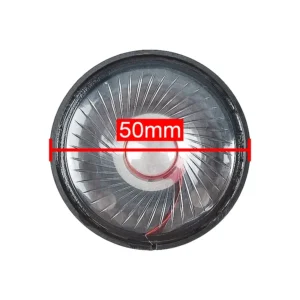
It’s not just about loudness. Driver diameter affects how bass extends and decays, but diaphragm stiffness, enclosure shape, and venting matter just as much. We’ve heard small drivers tuned better than some oversized ones. Size helps, but doesn’t guarantee good sound.
50mm vs 40mm Drivers: Key Differences
We tested several headsets back to back, including the M40X (40mm) and M50X (45mm). The most obvious difference was in the low end. The M50X had slightly more reach and felt more weighted with kick-heavy tracks and cinematic game intros. However, the M40X controlled mids and vocal separation better. In practice, better tuning mattered more than those extra 5 mm.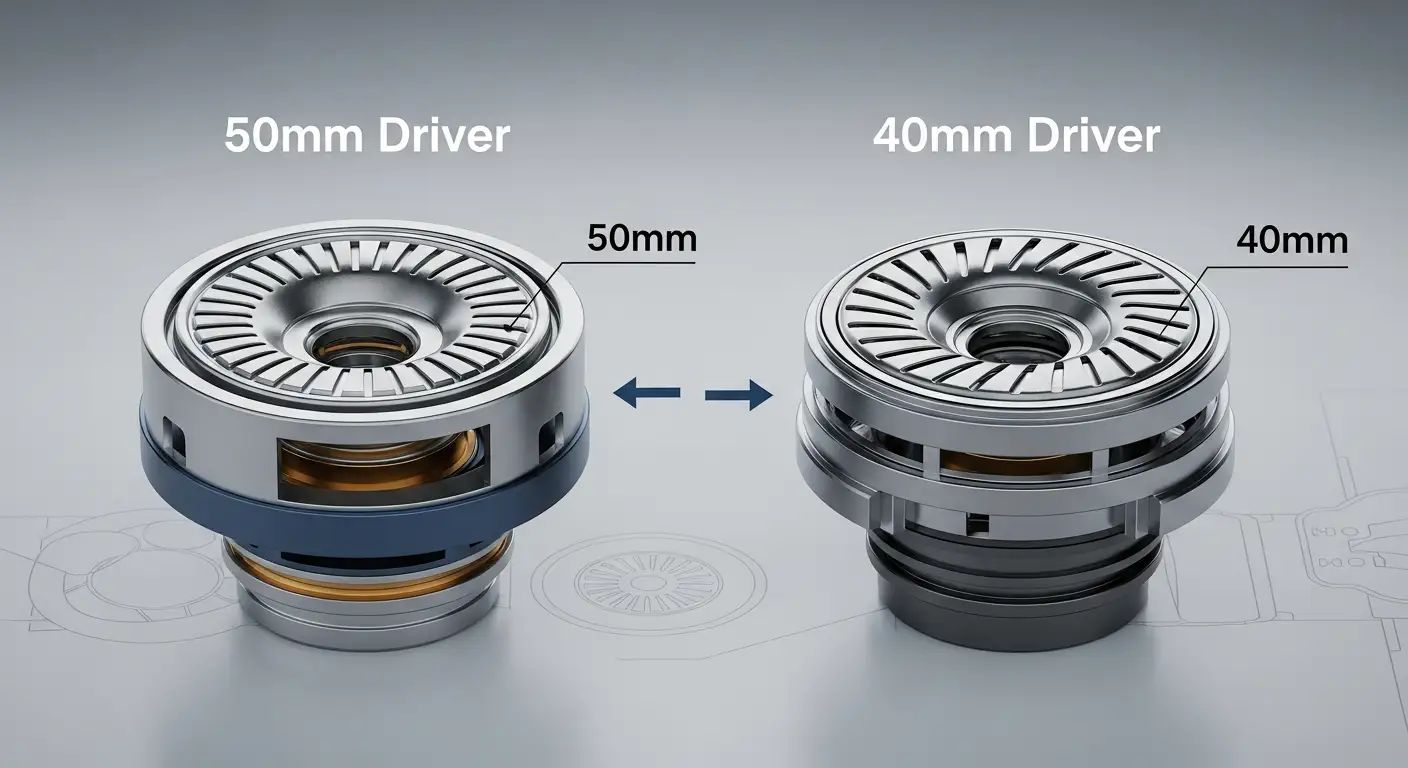
Larger drivers have downsides. One tester noticed that with certain 50mm drivers, treble detail felt stretched or slightly washed out at higher volumes. This doesn’t happen with every model, but it occurs in headsets where the diaphragm isn’t stiff enough or the enclosure isn’t properly damped.
When it works, the extra size gives you headroom to tune in more bass without killing detail. That’s why we often see 50mm drivers in gaming and studio headsets that prioritize both power and soundstage.
Why Manufacturers Often Use 50mm Drivers
From our reviews, brands use 50mm drivers as a safe starting point for building impactful, full-bodied sound. You get decent sensitivity without needing excessive power, and there’s enough size to tune for either fun or reference-style listening.
In gaming, this often means bigger soundstages and more low-frequency emphasis. In studio models, you get room to tune flatter curves without distortion. One reviewer used the ATH-M50x for years while editing voiceovers and preferred its extra bass extension for video content.
We also spoke with users who mod their own headsets. Several prefer 50mm units because they’re easier to swap into bigger cups, and most drop-in kits are already tuned for that driver size.
Real-World 50mm Driver Headphones
We’ve tested many headphones with 50mm drivers, and some stayed on our desks long after the review period ended.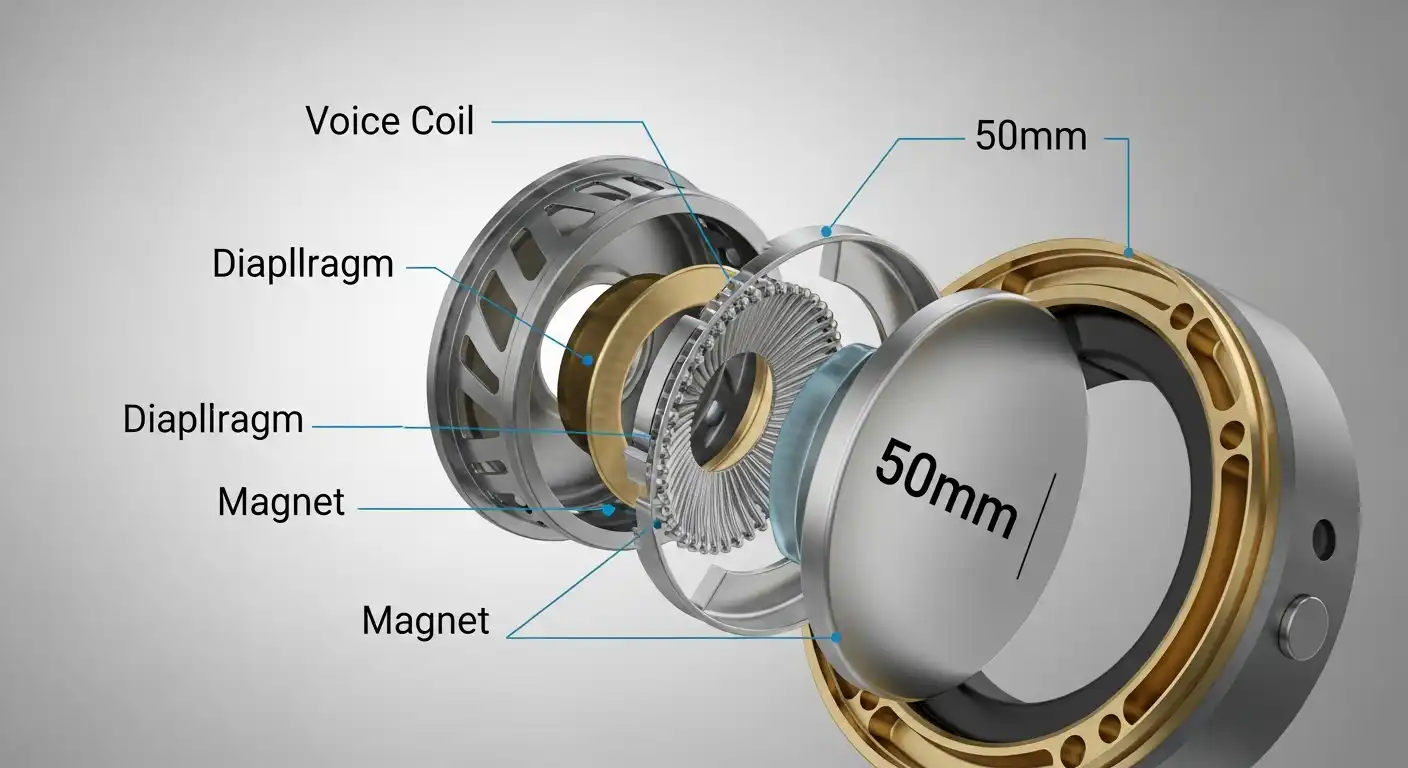
The Sivga SV021 surprised us. We didn’t expect much, but its bass hit with more weight than most other closed-back models in its price range. One editor used them daily for music and voice chat, noting they were one of the few headsets in that bracket that didn’t need EQ out of the box.
We also spent time with the Fostex TH808, which uses a 50mm neodymium driver. The bass was there, but the midrange clarity stood out. We ran it through vocal-heavy tracks and noticed clean separation, even with layered recordings. It stayed detailed without pushing too hard in the highs.
The ATH-M50x remains a go-to reference. Even though its drivers are technically 45mm, its tuning feels closer to most 50mm setups. We used it for video editing and voice processing. Its low-end helped us pick up tonal shifts in recordings that smaller drivers often miss.
Then there’s the DALI iO-12. It uses a full 50mm setup inside a polished housing. It didn’t need any flashy tricks. The soundstage was wide, the bass was steady, and the overall presentation felt balanced. This headphone doesn’t try to impress immediately, but grows on you after a few days.
Impact on Gaming and Music Experiences
In our gaming tests, 50mm drivers stood out most in open-world and cinematic titles. One team member used the HyperX Cloud Alpha Wireless in Apex Legends. They said the sub-bass gave more weight to drops and weapon sounds while keeping footsteps up front. It felt more grounded, not bloated.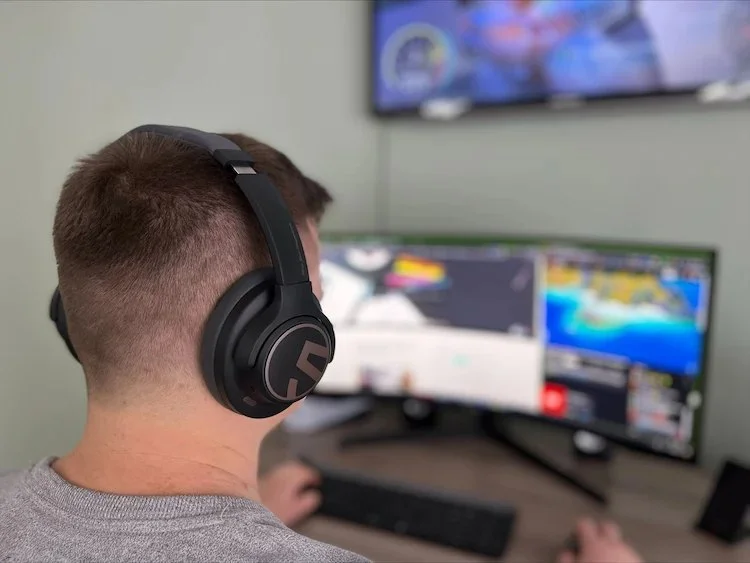
In games like Destiny 2 and Cyberpunk 2077, the soundstage opened up more than on similar 40mm headphones. This made ambient audio and spatial cues easier to follow, especially with virtual surround modes.
For music, 50mm drivers gave us more flexibility across genres. We tried everything from ambient and jazz to drum and bass. When the driver and enclosure matched well, we didn’t need to switch gear for different styles. Bass stayed full, mids were clean, and highs didn’t get lost.
However, it came down to how the headset was tuned, not just driver size. Some 50mm headsets sounded flat or bloated. Others, like the M50x and TH808, felt dialed in and natural.
Are Bigger Drivers Always Better?
We’ve tested enough headsets to know that bigger doesn’t always mean better. Yes, 50mm drivers move more air and give room for bass. But we’ve also used 50mm headsets that sounded soft or overly boomy, even with good specs on paper.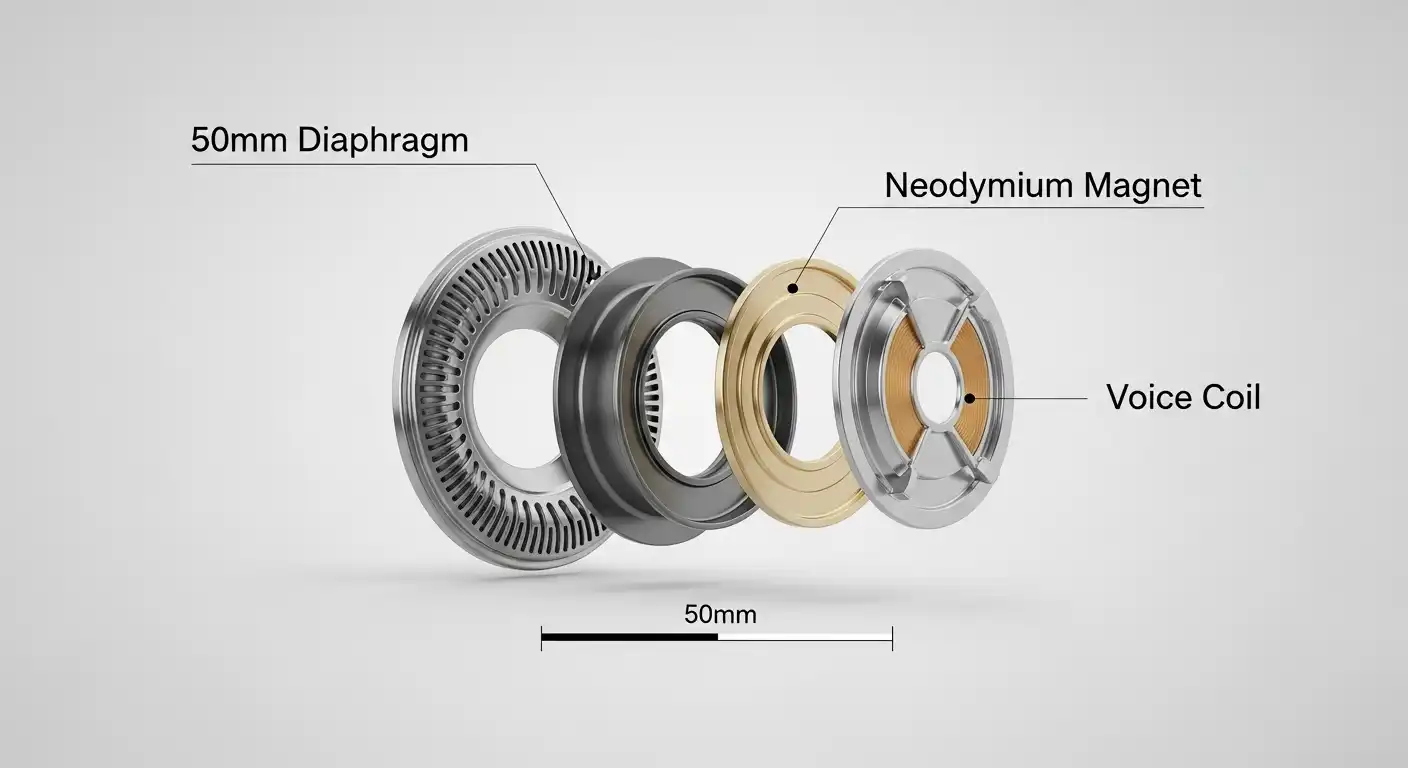
One tester swapped a daily pair of 40mm open-back headphones for a 50mm gaming headset, expecting a wider sound. They switched back after a week. The bass was louder, but the midrange smeared, and dialogue lost clarity during longer sessions.
Another example was a budget 50mm headset used for podcast editing. Even though specs claimed “enhanced clarity,” sibilants and plosives became harder to spot. Switching to an older M40X made a night-and-day difference.
Size doesn’t define the sound. How well everything is put together matters more. Diaphragm material, enclosure design, and internal damping matter more than a few extra millimetres. When the design is right, 50mm drivers can sound incredible. When it’s off, they fall flat, regardless of how impressive the box looks.
Final Take: Do 50mm Drivers Still Matter?
We’ve used dozens of headsets at BestTechRadar. 50mm drivers still make sense in the right setup. The added bass and broader soundstage can be a real advantage in gaming, especially when paired with virtual surround or open maps.
But size alone won’t save a bad design. Some of our favorite headsets this year didn’t need oversized drivers to sound great. They just had good tuning, properly sealed cups, and the right mix of features.
The M50X, Sivga SV021, and TH808 all show what 50mm can do when done right. We’ve used them for everything from gaming to mixing, and each brought something different. But with every new headset review, we ask the same question: how does it actually sound?
If you’re chasing numbers on a spec sheet, driver size might look important. But if you’re chasing good sound, look at the whole picture. That’s what makes the difference.
FAQs About 50mm Drivers
Are 50mm drivers better than 40mm?
Sometimes, but not always. We’ve tested 50mm drivers with better bass, but also heard 40mm drivers that sounded cleaner overall.
Why do so many gaming headsets use 50mm?
Stronger low-end, easier soundstage tuning, and more room for impact. For FPS and cinematic games, it works well.
Can I upgrade my headset to 50mm drivers?
Not easily. We’ve tried a few mods. Fitment was tricky, and getting proper tuning without ruining the seal was harder than expected.
Is size the most important factor?
No. One of our editors still uses a 40mm pair daily for studio work. It sounds better than most larger headsets we’ve tested this year.