You open a product page for a new pair of wireless earbuds and somewhere in the specs you see “13mm dynamic driver.” Most people skip past it. They go straight to battery life, noise cancellation, and price. But that one number is describing the component responsible for every sound you hear through those earbuds, and understanding it changes how you read every audio spec on the market.
The driver is the speaker inside each earbud. It takes an electrical signal from your phone or device and converts it into sound waves. Driver size, measured in millimeters, refers to the diameter of the diaphragm, the thin membrane that vibrates to produce those sound waves. A 13mm driver sits on the larger end of what is physically possible inside an earbud shell, and that has real consequences for how the earbuds sound.
What follows covers how a 13mm driver works, what the diaphragm is made of, how size translates into actual sound differences, and which earbuds use them.
How a driver works inside an earbud
Every dynamic driver, regardless of size, works the same way. An audio signal flows into the driver as alternating electrical current. That current passes through a voice coil, a tightly wound coil of ultra-fine copper wire sitting inside a neodymium magnet. When current flows through the coil, it becomes an electromagnet. The interaction between the coil’s changing magnetic field and the fixed field of the neodymium magnet forces the coil to move back and forth rapidly.
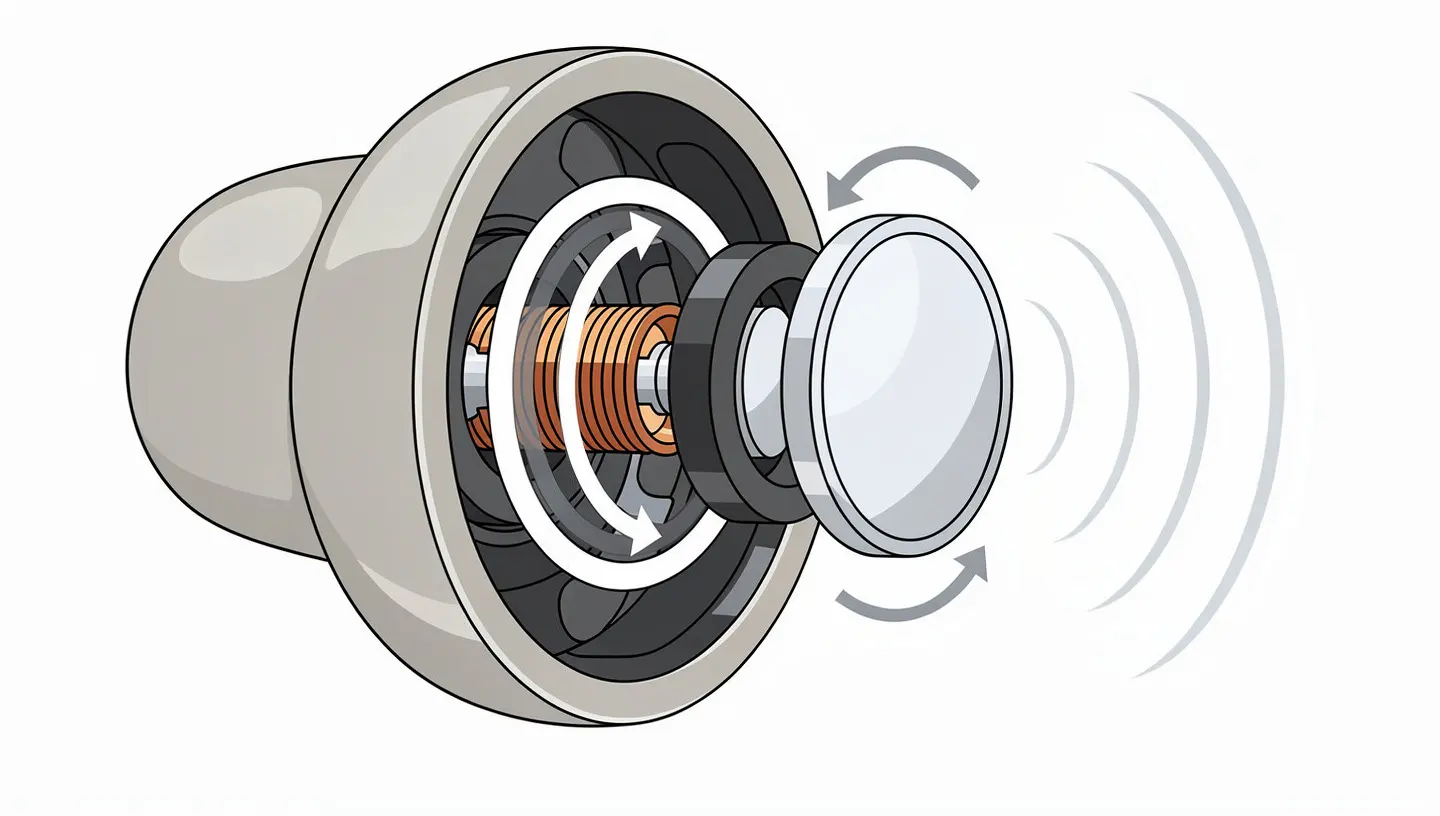
The coil is attached to the diaphragm, so as the coil moves, the diaphragm moves with it. That movement pushes and pulls air, creating pressure waves that your ears interpret as sound. The suspension, sometimes called the surround or spider, keeps the diaphragm centered and controls the range of its movement. The entire assembly sits inside a frame or housing that holds every component in alignment and protects it from physical damage.
Diaphragm, voice coil and magnet: the three moving parts
The diaphragm is the most important variable in driver performance. It needs to be light enough to move quickly for accurate high-frequency reproduction, rigid enough to resist unwanted flexing that causes distortion, and damped well enough to stop vibrating precisely when the signal stops. Those three requirements pull in different directions, and diaphragm material is where manufacturers make their acoustic choices.
The voice coil thickness and winding precision determine how cleanly the diaphragm moves at each frequency. The neodymium magnet strength determines sensitivity, which is how much sound output you get per milliwatt of input power. Stronger magnets allow the driver to respond faster and with less distortion at higher volumes. In a 13mm driver, all three components scale up proportionally compared to smaller units, which is what gives the larger driver its acoustic advantages.
What makes a 13mm driver different from smaller ones
Standard earbud drivers range from 6mm in compact designs up to 14mm or 15mm in larger shells. Most budget and mid-range TWS earbuds ship with 6mm to 10mm drivers. The 13mm size sits near the upper end of what fits inside an in-ear form factor without making the earbud physically uncomfortable to wear.
The core difference is air displacement. A larger diaphragm covers more surface area. When it moves, it displaces more air than a smaller diaphragm moving the same distance. More air displacement translates directly into more acoustic energy at lower frequencies, which means more bass output without the driver having to work as hard. It also means the driver reaches higher volume levels before distortion starts to appear.
Air displacement and bass response
Bass frequencies require large diaphragm movement to reproduce accurately. Low-end notes like kick drums, bass guitar, and sub-bass in electronic music demand more physical excursion from the driver than mid or high frequencies do. A 6mm driver moving the same distance as a 13mm driver produces far less pressure, because the surface area pushing the air is smaller. This is why smaller drivers often sound thin in the low end, not because they are poorly made but because physics imposes a ceiling on how much bass a small diaphragm can generate.
A 13mm driver has the diaphragm area to reproduce bass with weight and texture. Sub-bass extension, the very low rumble below 60Hz that you feel more than hear, is more accessible to larger drivers. Mid-bass punch, the thud of a kick drum or the weight of a bass guitar, is more controlled and impactful because the driver is not being pushed to its physical limit to produce it.
Soundstage and how driver size affects it
Soundstage is how wide and three-dimensional audio feels. A recording with good soundstage separation places instruments at different positions across the stereo field, giving the sense of distance and space between them. Driver size contributes to soundstage by determining how much acoustic energy the driver puts into the air at different frequency ranges simultaneously.
Larger drivers handle low, mid and high frequencies at the same time without each frequency range competing for dynamic headroom. That keeps the spatial information in the recording intact. Smaller drivers, at higher volume, sometimes compress the dynamic range because they are running close to their physical output limit, which collapses the sense of space in the recording.
Diaphragm materials: PET, titanium, composite and what each one does
Driver size determines the physical ceiling for performance. Diaphragm material determines how much of that potential is actually realized. Two earbuds can both use a 13mm driver and sound completely different depending on what the diaphragm is made of and how the driver is tuned.
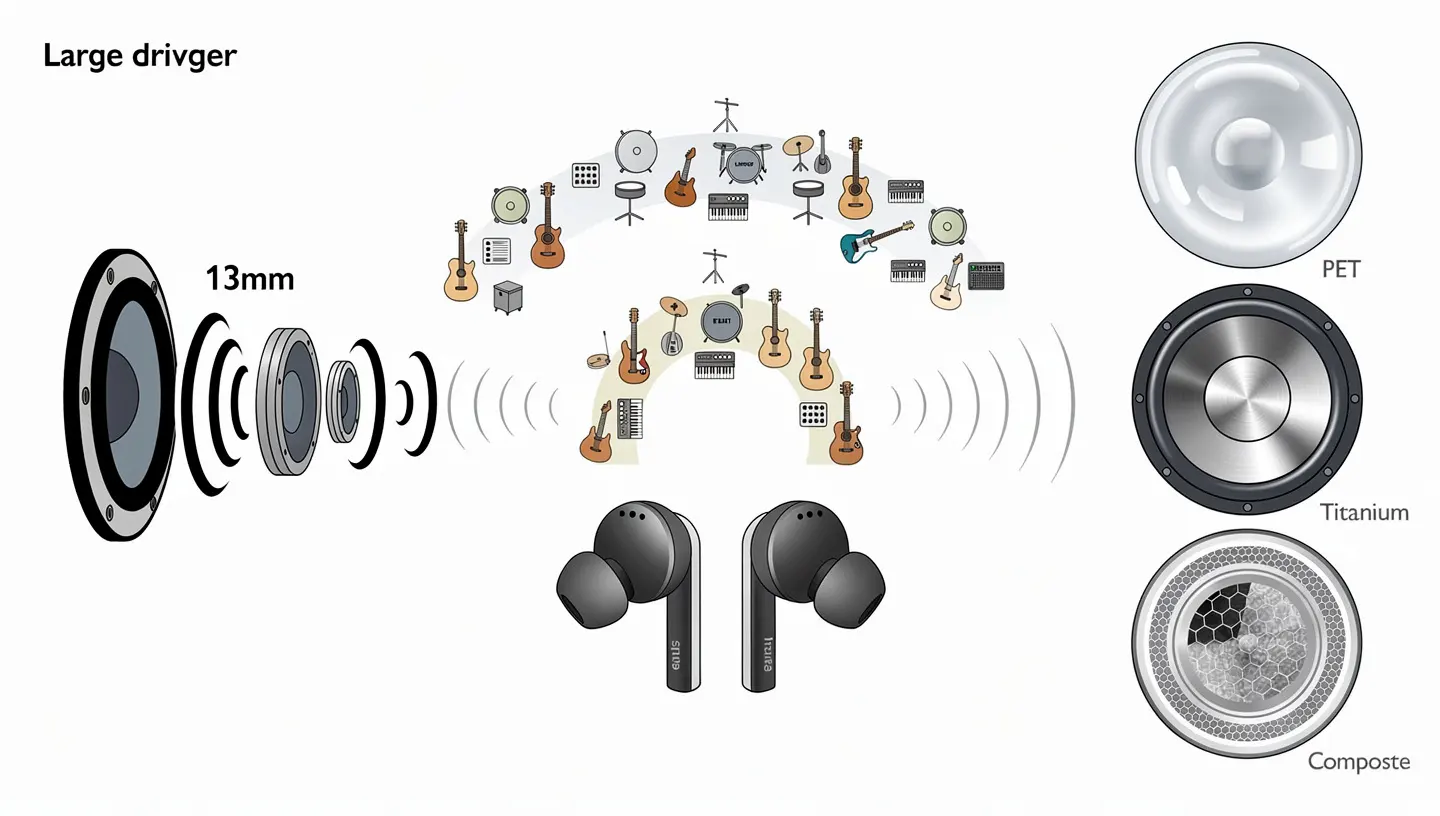
This is the part most product listings skip past entirely.
PET and composite diaphragms
PET (polyethylene terephthalate) is the most common diaphragm material in consumer earbuds. It is lightweight, flexible, and inexpensive to manufacture at consistent quality. PET diaphragms tend toward a warm, smooth sound signature with rounded bass. They handle moderate distortion well, meaning they stay clean at typical listening volumes, but they lack the rigidity to track very fast high-frequency transients precisely.
Composite diaphragms combine PET with other materials, often PU (polyurethane), biofiber, or paper pulp layers. The goal is to take the flexibility of PET and add damping from other materials to control resonance more precisely. The SoundPEATS Air5, which uses a 13mm composite diaphragm made from Japanese imported paper pulp, biofiber and PU, is a practical example of how composite construction affects tuning. The layered material damps unwanted resonance while keeping the driver light enough for accurate high-frequency tracking.
Titanium and graphene diaphragms
Titanium diaphragms are stiffer than PET, which allows faster transient response. When a drumstick hits a cymbal, a titanium diaphragm snaps to the new position and back faster than PET, which means the attack and decay of percussive sounds come through with more precision. The trade-off is that titanium can produce a harder edge at high frequencies, which some listeners find fatiguing over long sessions. Manufacturers tune around this by controlling the resonance peak through housing geometry.
Graphene composite diaphragms represent the higher end of driver materials available in consumer earbuds today. Graphene is extremely light and exceptionally stiff, a combination that produces fast transients and high clarity without the hardness associated with titanium. Graphene drivers tend to appear in earbuds positioned as hi-fi or audiophile products, where the manufacturer is prioritizing detail retrieval and accuracy over bass impact.
Bio-cellulose and what SoundPEATS uses in the Air5
Bio-cellulose diaphragms are made from bacterial cellulose fibers and are used in premium driver units where natural, accurate midrange reproduction is the priority. Bio-cellulose has a naturally damped character that handles midrange frequencies, where vocals and most instruments live, with a richness and texture that synthetic materials often miss. The SoundPEATS Air5 composite approach, combining paper pulp and biofiber with PU, borrows from this acoustic principle while keeping manufacturing costs manageable. The result, as observed across testing of that model, is a midrange that sounds natural and well-resolved rather than hollow or thin.
13mm drivers in TWS earbuds: where the size advantage shows
The advantages of a larger driver are not equally useful in every listening situation. Knowing where a 13mm driver makes a clear, audible difference helps calibrate expectations before buying.
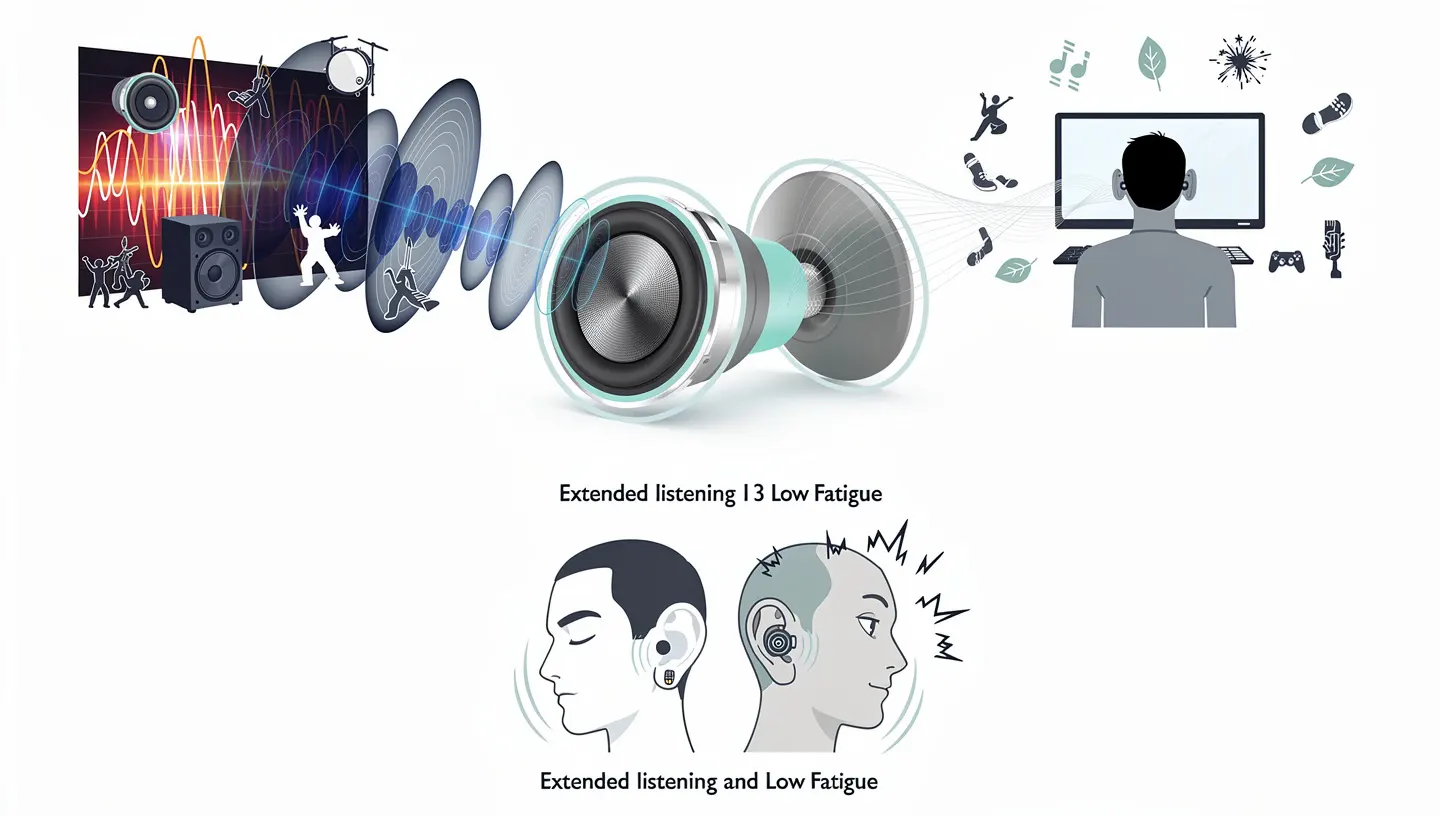
These are the areas where the size advantage consistently shows up across the earbuds we have tested with 13mm drivers.
Bass-heavy genres: hip-hop, EDM and electronic
Hip-hop, EDM, trap, drum and bass, and any genre that relies on sub-bass and kick drum impact benefits directly from a larger driver. The SoundPEATS Air6 HS, which uses a 13mm Triple Magnet Dynamic Driver, produces low-end weight that would be physically impossible from a 6mm or 8mm driver in the same price range. The triple magnet configuration adds magnetic field strength that improves sensitivity and tightens bass control, reducing the bloated or one-note bass that cheaper drivers produce in the same size class.
The SoundPEATS Air5 Pro follows the same principle. In testing, the bass on the Air5 Pro was described as controlled and deep, with good sub-bass extension that never overwhelms the rest of the mix. That balance, deep without being bloated, is achievable because the 13mm driver is not being pushed anywhere near its physical limit to produce the low-end impact.
Gaming and spatial audio
Spatial audio in games relies on the driver’s ability to reproduce low-level sounds, like distant footsteps or ambient environmental noise, at the same time as louder foreground sounds. A driver with limited dynamic headroom compresses the quieter elements, making them harder to locate. A 13mm driver handles this layering more cleanly because it has physical room to move for both quiet detail and louder impact without the two competing for the same mechanical bandwidth.
For earbuds used in gaming, the size advantage pairs directly with the low-latency modes available in advanced codecs. Low latency handles the timing between image and sound; the 13mm driver handles the spatial accuracy of what you hear when timing is correct. For a closer look at how earbud technologies interact with audio performance, including how the driver chain connects to the rest of the audio path, that guide covers the full picture.
Extended listening and fatigue
A driver working near its physical limit introduces distortion, and distortion causes listening fatigue even when listeners cannot consciously identify it. The sensation of needing to take headphones off after an hour, even at moderate volume, often has more to do with distortion than with volume itself.
A 13mm driver at typical listening volume is not close to its output limit. It produces the required sound pressure with less mechanical effort, which keeps distortion low and maintains clean, undistorted sound across long sessions. This is one reason why earbuds with larger drivers, even budget ones, often feel less tiring to use over several hours than earbuds with small drivers pushed to match the same perceived volume.
Where driver size stops mattering: tuning, chipset and codec
Driver size is not the whole story. A large driver with poor tuning sounds worse than a well-tuned small driver, and the history of audio is full of examples that confirm this. The Sony WF-1000XM4 uses a 6mm driver and is widely considered one of the best-measuring earbuds ever tested.
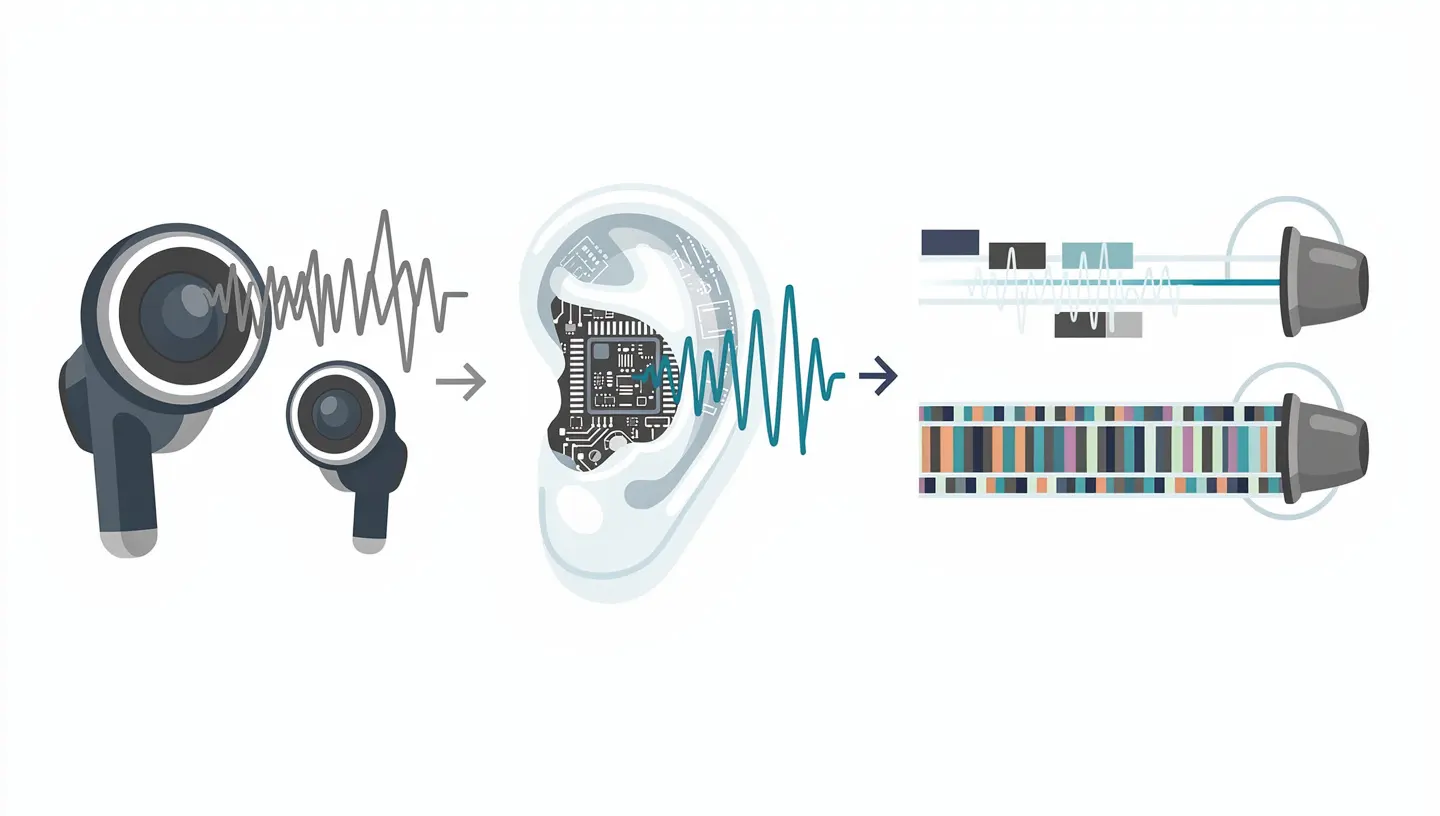
The Nothing Ear Stick used a 12.6mm driver and received mixed sound quality assessments. Size creates potential; tuning determines whether that potential is realized.
The chipset inside the earbuds determines which Bluetooth codecs are supported, how the audio signal is processed before it reaches the driver, and whether features like active noise cancellation or EQ are available. A 13mm driver paired with a Qualcomm QCC3091 chipset, as in the SoundPEATS Air5, has access to aptX Lossless, LDAC, and Snapdragon Sound certification. That signal chain delivers considerably more audio data to the driver than a 13mm driver in a budget earbud running basic SBC. The driver can only work with what it receives. More detail in the signal means more detail in the output, regardless of driver size.
The codec is the compression format used to send audio from your phone to the earbuds over Bluetooth. A 13mm driver receiving a 990 kbps LDAC stream has far more raw audio information to work with than the same driver receiving a 328 kbps SBC signal. The driver does not manufacture detail that is not in the signal. For anyone relying on hi-res audio sources, the quality ceiling is set by the weakest link in the chain, and that link is usually the codec, not the driver size.
Housing geometry, acoustic tuning chambers, and vent placement all affect how the driver’s output reaches the ear canal. Two earbuds with identical 13mm drivers tuned differently through housing design produce measurably different frequency responses. The brand’s acoustic engineers have at least as much influence over the final sound as the driver specification on the box.
13mm vs 10mm and 12mm drivers: what the numbers mean in practice
The 10mm driver is the most common size in mid-range TWS earbuds. At this size, manufacturers have decades of tuning experience and a mature supply chain for high-quality driver units. A well-tuned 10mm driver delivers balanced frequency response with good clarity across the full range. Where it runs into physical limits is the low end: sub-bass extension and bass impact require more mechanical effort from a 10mm diaphragm, which either pushes the driver harder or leaves the low end feeling lighter than what a 13mm produces at comparable volume.
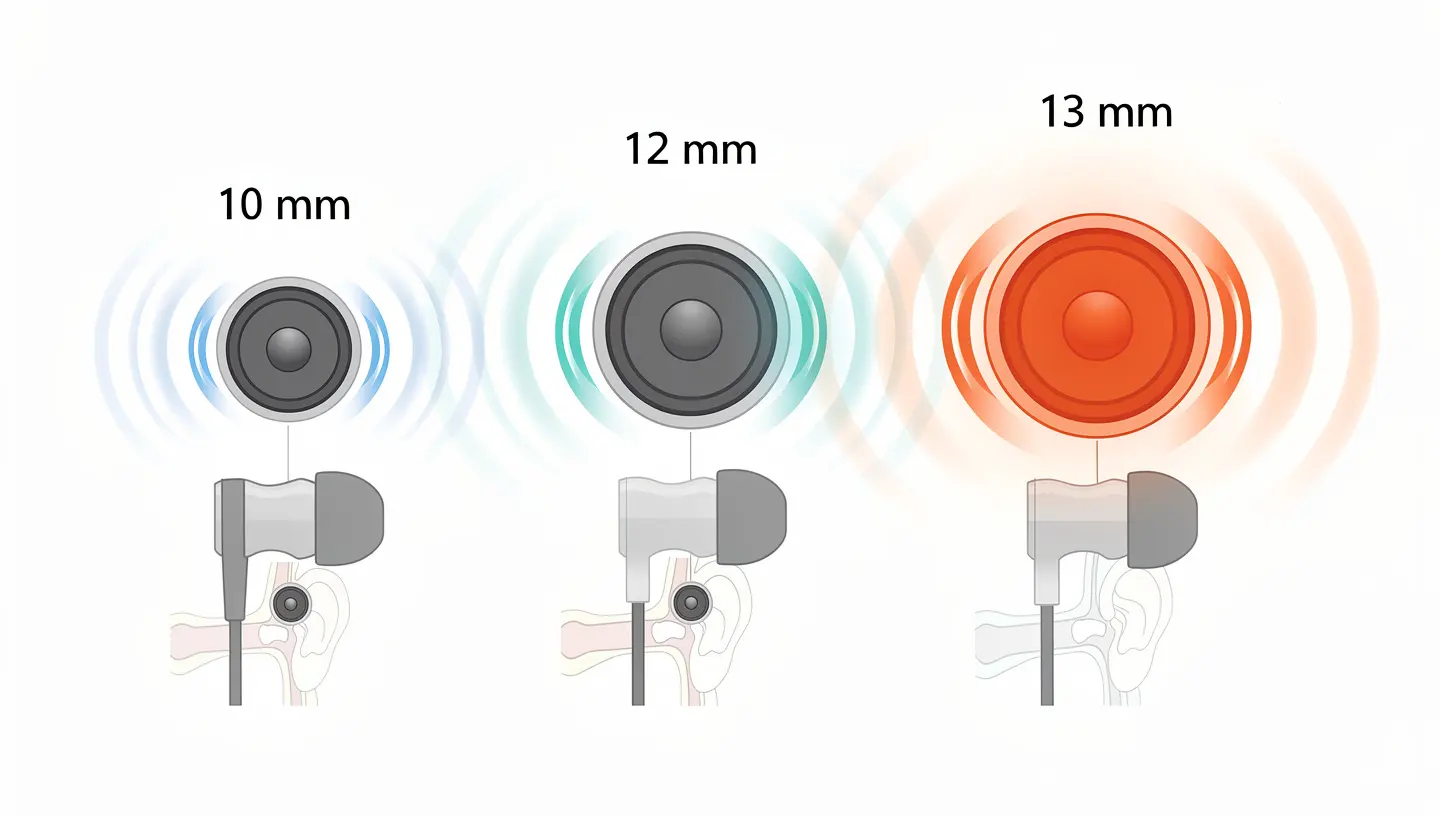
The 12mm driver occupies a middle position. The SoundPEATS Clip1 and the PearlClip Pro, both of which we have tested, use 12mm drivers in a clip-on form factor. At 12mm, the driver produces more bass output than a 10mm while keeping the physical shell small enough for a clip-on design. Comparing the Clip1 against the PearlClip Pro directly illustrated how driver size interacts with housing shape: the open-ear design of both models means the driver is not working against a sealed ear canal, so absolute bass output is lower than in-ear equivalents regardless of driver size.
For standard in-ear TWS earbuds with silicone tips, the practical difference between 12mm and 13mm is narrower than the difference between 10mm and 13mm. The extra millimeter of diaphragm diameter adds marginal air displacement improvement, and most of the real difference between models at those two sizes comes from tuning and diaphragm material rather than the size itself. The jump from 10mm to 13mm is more acoustically significant than the jump from 12mm to 13mm.
| Driver size | Typical use | Bass output | Clarity | Common in |
|---|---|---|---|---|
| 6mm–8mm | Compact TWS, IEM | Low | Good in mids/highs | Sony WF-1000XM4, budget earbuds |
| 10mm | Balanced TWS | Moderate | Balanced across range | Mid-range TWS, AirPods Pro 2 |
| 12mm | Clip-on, semi in-ear | Moderate-high | Good | SoundPEATS Clip1, PearlClip Pro |
| 13mm | Semi in-ear, in-ear TWS | High | Good with quality tuning | SoundPEATS Air5, Air5 Pro, Air6 HS |
| 14mm+ | Large in-ear, flathead | Very high | Varies by tuning | Audiophile IEM, open-back earbuds |
Which earbuds with 13mm drivers we have tested
Across the models reviewed on this site that use a 13mm driver, a consistent pattern holds: the size advantage in bass output shows up in every one of them, but the final sound signature is shaped entirely by the diaphragm material and acoustic tuning specific to each model.
The SoundPEATS Air5 uses a 13mm composite driver with a layered diaphragm of Japanese paper pulp, biofiber and PU. The tuning on the Air5 leans slightly warm with natural midrange reproduction and controlled bass. It is a semi in-ear design running the Qualcomm QCC3091 chipset with aptX Adaptive, aptX Lossless and LDAC support. The full breakdown is in the SoundPEATS Air5 review.
The SoundPEATS Air5 Pro also runs a 13mm driver but pairs it with a different housing geometry and a more disciplined tuning compared to the previous Air4 Pro, which had a V-shaped sound and a more aggressive low end. The Air5 Pro’s 13mm driver delivers deeper bass than its predecessor but with better resolution across the midrange. Details from the SoundPEATS Air5 Pro review cover how the driver performs across codecs including aptX Lossless.
The SoundPEATS Air6 HS uses a 13mm Triple Magnet Dynamic Driver, which adds a third neodymium magnet to the standard two-magnet configuration. The stronger magnetic field increases driver sensitivity and improves bass control. Running Bluetooth 6.0 with LDAC support, the Air6 HS is currently the most recent 13mm driver model tested on this site, and it delivers low-end output that is notable for a $39.99 earbud. Full details are in the SoundPEATS Air6 HS review linked above.
For comparison, the SoundPEATS Clip1 and the PearlClip Pro both use 12mm drivers in a clip-on open-ear design. Testing both of those alongside the Air5 and Air6 HS makes the bass difference between 12mm and 13mm perceptible in direct comparison, though the open-ear form factor of the clip-on models means absolute low-end output is lower regardless of driver size. The open housing lets bass frequencies escape rather than channel them toward the ear canal.
If you are comparing earbuds from multiple brands beyond SoundPEATS and want to see how the best wireless options stack up, the best wireless earbuds guide covers a wider field including models at different driver sizes.
Which driver size to look for when buying earbuds
For most listeners buying TWS earbuds in the $40 to $100 range, a 13mm driver is a meaningful specification to look for if bass response and low-end weight matter in the genres you listen to most. Hip-hop, electronic music, pop, film scores, and gaming audio all benefit from what a 13mm driver can produce physically. Classical, acoustic, jazz and vocal-focused music benefit less from raw bass output and more from midrange clarity and treble accuracy, where diaphragm material and tuning play a larger role than size.
If you are buying clip-on or open-ear earbuds specifically, driver size matters less than it does in sealed in-ear designs. The open housing means bass frequencies escape into the room rather than concentrating in the ear canal, so a 12mm driver in a clip-on produces less bass than a 10mm driver in a sealed in-ear design. The acoustic effect of the housing shape outweighs the effect of the extra 1 or 2mm in driver diameter.
For sealed in-ear TWS earbuds with silicone tips, 13mm is the size at which driver diameter starts making a consistent, audible contribution to bass depth and overall output at moderate volumes. Below 10mm, the trade-offs become more noticeable in the low end. Above 13mm, the improvements are marginal for most listeners and the driver housing starts to push the physical size of the earbud into less comfortable territory.
The specification to read alongside driver size is diaphragm material. A 13mm PET driver and a 13mm graphene composite driver in the same housing will sound different. Composite and advanced materials narrow the gap between a good-sounding 10mm driver and a 13mm driver, because the material is compensating for the size advantage. For an explanation of how the chipset inside the earbuds shapes audio performance independently of the driver, that guide covers what the processing side of the chain contributes.
Frequently asked questions
What does 13mm driver mean in earbuds?
It refers to the diameter of the driver’s diaphragm, the vibrating membrane that produces sound inside each earbud. A 13mm driver is on the larger end of what fits inside an earbud shell. The larger diaphragm moves more air, which produces deeper bass response and more output capacity before distortion appears.
Is a 13mm driver better than a 10mm driver?
For bass output and low-end extension, yes. A 13mm driver displaces more air than a 10mm, which translates to deeper and more impactful bass. For clarity in mids and highs, the difference comes down to diaphragm material and tuning rather than size. A well-tuned 10mm driver with a quality diaphragm material can outperform a poorly tuned 13mm driver in overall clarity.
Do larger drivers use more battery?
Not significantly in practice. Battery consumption in earbuds is dominated by the Bluetooth chipset, ANC processing, and codec workload rather than driver size. A 13mm driver at a given volume level actually draws less relative power than a smaller driver producing the same volume, because the larger driver is not being pushed as hard to generate equivalent sound pressure.
What is a composite diaphragm in a 13mm driver?
A composite diaphragm combines multiple materials, typically PET or polymer film with layers of biofiber, paper pulp, PU, or carbon compounds, to achieve a balance between low mass, high rigidity, and controlled damping. Each material layer addresses a different acoustic weakness: PET provides the structural base, biofiber or paper pulp adds damping to reduce resonance, and PU controls the surround flexibility. The result is a diaphragm tuned for a specific sound signature rather than relying on a single material’s natural characteristics.
Why do some premium earbuds use smaller drivers?
Smaller drivers are easier to engineer for flat, accurate frequency response because they have less diaphragm mass to control. They also fit in smaller housings, which allows better ear canal seal and passive noise isolation. Sony’s WF-1000XM4 uses a 6mm driver and measures extremely accurately because Sony invested in advanced tuning and driver engineering rather than using size as the primary tool for bass output. Premium earbuds often use digital signal processing and EQ applied at the chipset level to compensate for what smaller drivers cannot produce physically.
What is a triple magnet driver?
A triple magnet driver uses three neodymium magnets instead of the standard one or two to generate the magnetic field that drives the voice coil. More magnetic field strength means the voice coil responds faster and with greater force to the audio signal. This improves sensitivity, which means more output per milliwatt of power, and tightens bass control by giving the driver more authority over diaphragm movement. The SoundPEATS Air6 HS uses a triple magnet 13mm driver, which is one reason its bass performance stands out at its price point.