If you are asking which earbuds have H2 chip, the list is longer than it used to be. The H2 chip is now inside the AirPods Pro 2, AirPods Pro 3, AirPods 4, AirPods 5 and the Beats Powerbeats Pro 2, plus one pair of over-ear headphones, the AirPods Max 2. Older pairs such as the AirPods 2, AirPods 3 and the Powerbeats Fit still run on the H1.
Many articles still say that only the AirPods Pro 2 has this chip, and that was true in 2022. It is not true today. Below we go through every model that has it, the models that do not, what the chip does for you and what you need besides the earbuds to use each feature. We also cover Android and how to check the chip in a pair you own or plan to buy.
Quick Answer
These are the earbuds and headphones with the H2 chip right now:
- AirPods Pro 2, the first pair with the chip
- AirPods Pro 3
- AirPods 4 and AirPods 4 with Active Noise Cancellation
- AirPods 5 and AirPods 5 with Wireless Charging Case
- Beats Powerbeats Pro 2
- AirPods Max 2, which are over-ear headphones and not earbuds
These do not have it: the AirPods 2, the AirPods 3, the first AirPods Max, the 2024 USB-C AirPods Max, the Powerbeats Fit and the Beats Fit Pro. All of them run on the H1. If you want an H2 pair on a budget, the AirPods 5 start at $129, and for the best all-round pair we would pick the AirPods Pro 3.
Which Earbuds Have the H2 Chip? The Full List
This table answers which earbuds have H2 chip, model by model. It matches Apple’s own comparison page for the AirPods range, and you can check it yourself on Apple’s AirPods comparison page. For the Powerbeats Pro 2 we relied on the launch coverage and the reviews.
| Model | Type | Note |
|---|---|---|
| AirPods Pro 2 | In-ear earbuds | First pair with the chip, 2022 |
| AirPods Pro 3 | In-ear earbuds | Kept the same chip, no new one |
| AirPods 4 | Earbuds | Standard version |
| AirPods 4 with Active Noise Cancellation | Earbuds | Same chip as the standard version |
| AirPods 5 | Earbuds | Announced 9 September 2026 |
| AirPods 5 with Wireless Charging Case | Earbuds | Higher priced version |
| Beats Powerbeats Pro 2 | Hook earbuds | Heart-rate monitoring, February 2025 |
| AirPods Max 2 | Over-ear headphones | Two chips, March 2026 |
AirPods Pro 2
This is the pair that started it. Apple introduced the AirPods Pro 2 in September 2022 with an all-new H2 chip, the successor to the H1, and it brought improved active noise cancellation, a new Adaptive Transparency Mode and better sound. The earbuds also got touch controls for volume, and personalized spatial audio worked with them through iOS 16. You control them with presses and swipes on the stems, and with “Hey Siri”.
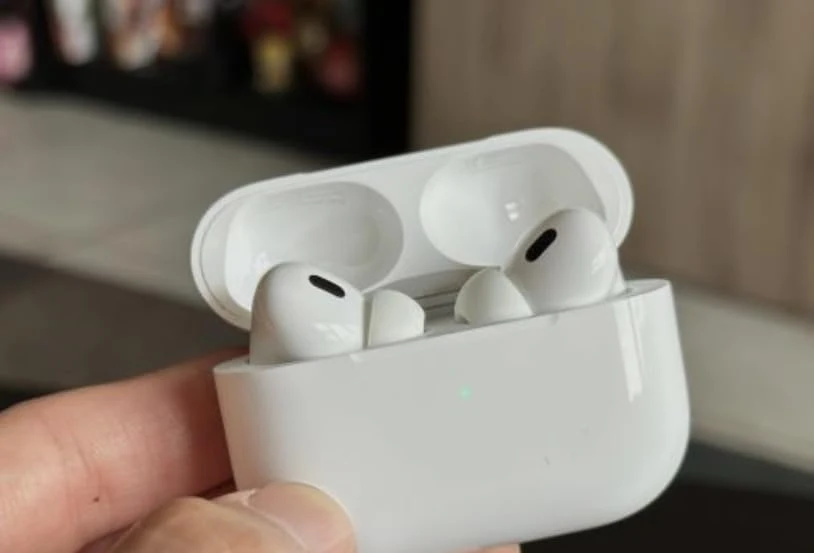
Later, several iOS 17 features were limited to the AirPods Pro 2 because they depend on the chip. Battery life is up to 6 hours per charge with noise cancellation on and up to 30 hours with the case. Each earbud weighs 5.3 grams and the rating is IP54. Apple says the AirPods Pro 2 cancel twice as much noise as the first AirPods Pro. There is also a version with a USB-C charging case, and Apple lists the same chip for both.
AirPods Pro 3
The AirPods Pro 3 use the H2 as well. Many people expected a new H3 chip in this pair, but Apple stayed with the same chip, so on the chip side the Pro 3 and the Pro 2 are the same generation. The difference is in the build and the extras. You get five ear tip sizes, a lighter and more stable shape at 5.6 grams, 8 hours of battery life in the buds and 24 hours with the case, plus a heart-rate sensor and live translation. The water resistance is IP57, a step up from the AirPods Pro 2.
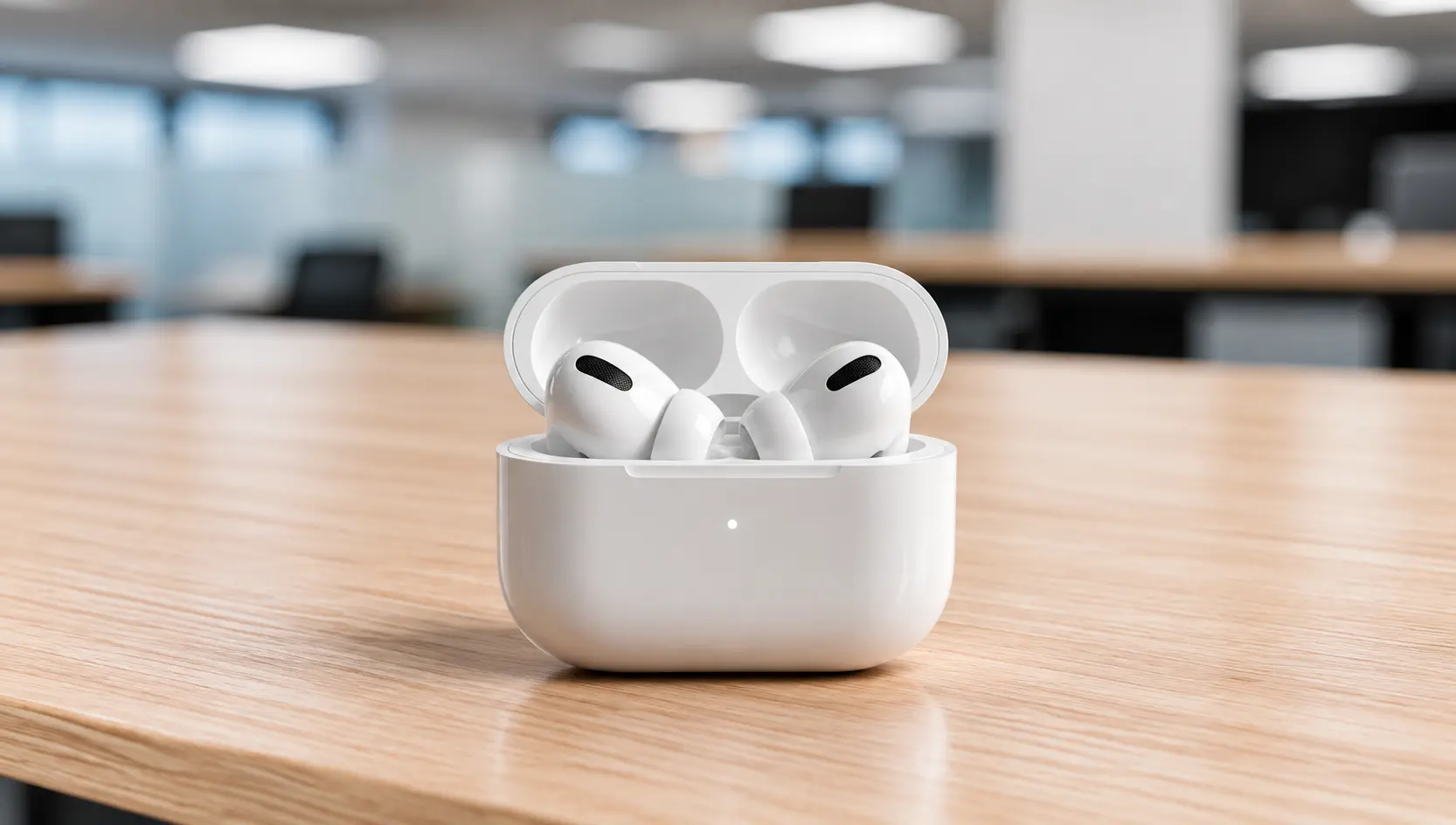
Many of those features need an iPhone, and Android users lose most of them. The list price is $249, and deals have been around $179 to $199, so check the price on the day you buy.
AirPods 4 and AirPods 4 With Active Noise Cancellation
Both AirPods 4 models use the same H2 chip that Apple put in the AirPods Pro 2. The standard version has no noise cancellation, and the second version adds active noise cancellation, so the chip alone does not tell you which one has ANC. They have an open design that can be too wide for small ears.
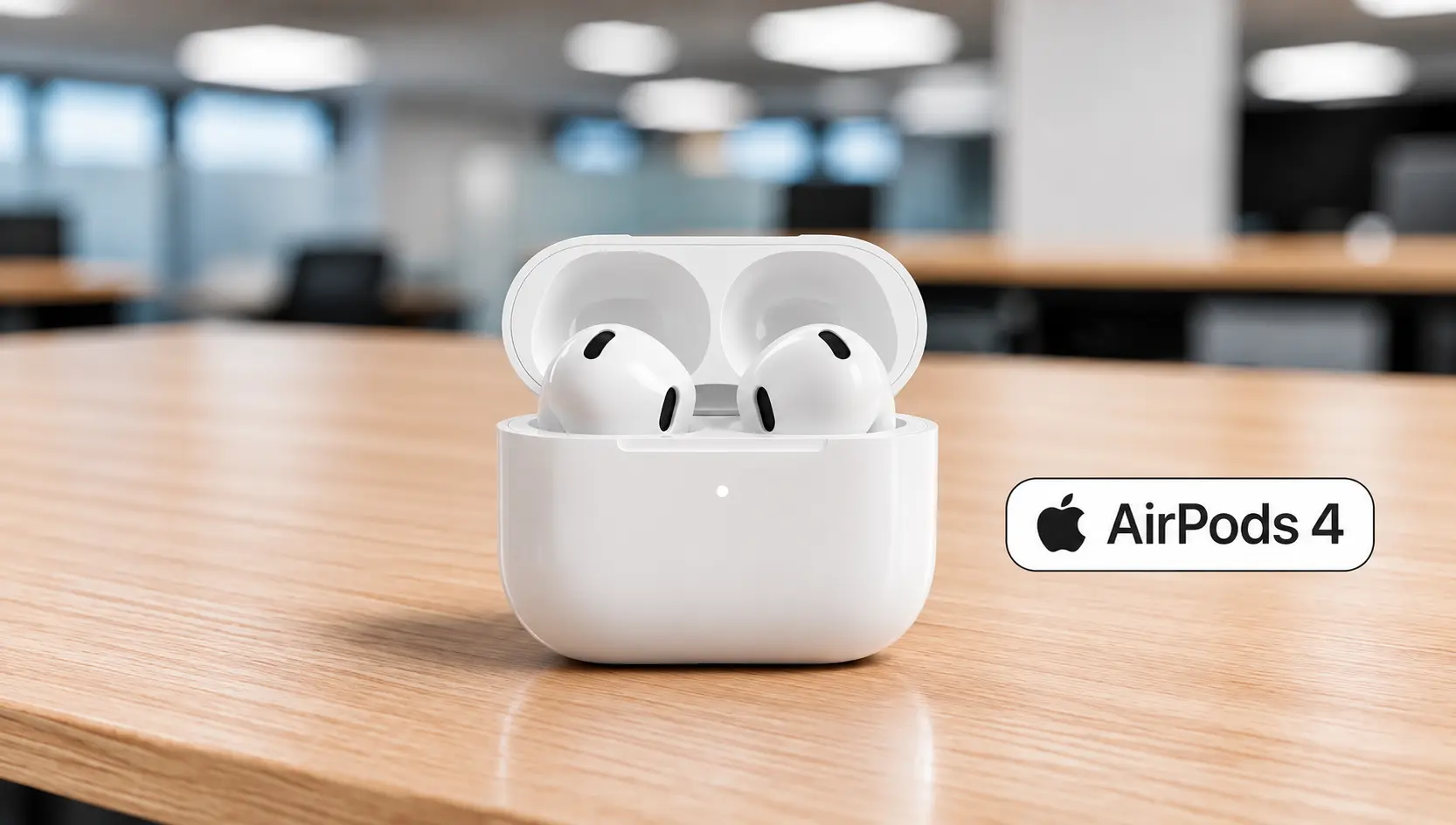
The standard version lasts up to 5 hours with noise control off and 30 hours with the case. The one with Active Noise Cancellation lasts up to 4 hours and 20 hours with the case. Each earbud weighs 4.3 grams and the rating is IP54.
Features include personalized spatial audio, studio quality recording, stem gestures, Camera Remote, water resistance and Pause Audio for Sleep. If you ask us whether the AirPods 4 have the chip, the answer is yes for both versions.
AirPods 5 and AirPods 5 With Wireless Charging Case
Apple announced the AirPods 5 on 9 September 2026 in two models, and both run on the H2. The base model costs $129, and the model with the wireless charging case costs $149 and adds on-stem volume controls. Active noise cancellation is standard on both. With noise cancellation on, the base model lasts up to 4 hours per charge and 20 hours with the case, and the $149 model lasts up to 5 hours and 22 hours. Each earbud weighs 4.3 grams and the rating is IP57.
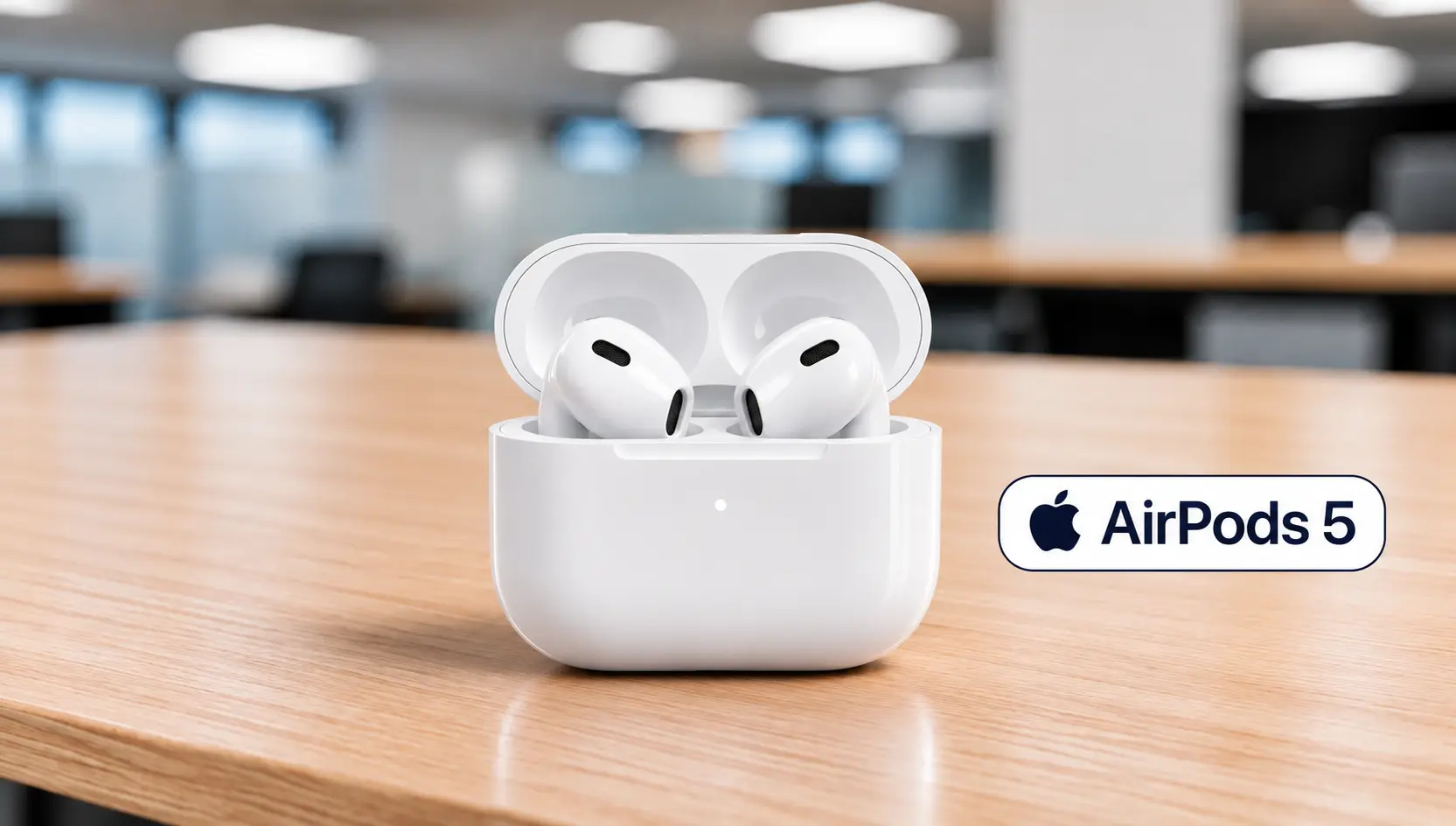
The chip is not the upgrade here, because it is the same one as in the AirPods 4, AirPods Pro 3 and AirPods Max 2. The new part is the feature list and the price. The AirPods 5 were due in stores on 18 September, and iOS 27 arrived four days earlier, on 14 September. The Apple Wiki page for the AirPods 5 also names this chip as the processor.
Beats Powerbeats Pro 2
The Powerbeats Pro 2 are the only Beats earbuds on the list. Beats announced them on 11 February 2025 with an H2 chip, built-in heart-rate monitoring and active noise cancellation. They were the first earbuds from Apple’s family with heart-rate tracking, they cost $250 and they came in four colors.
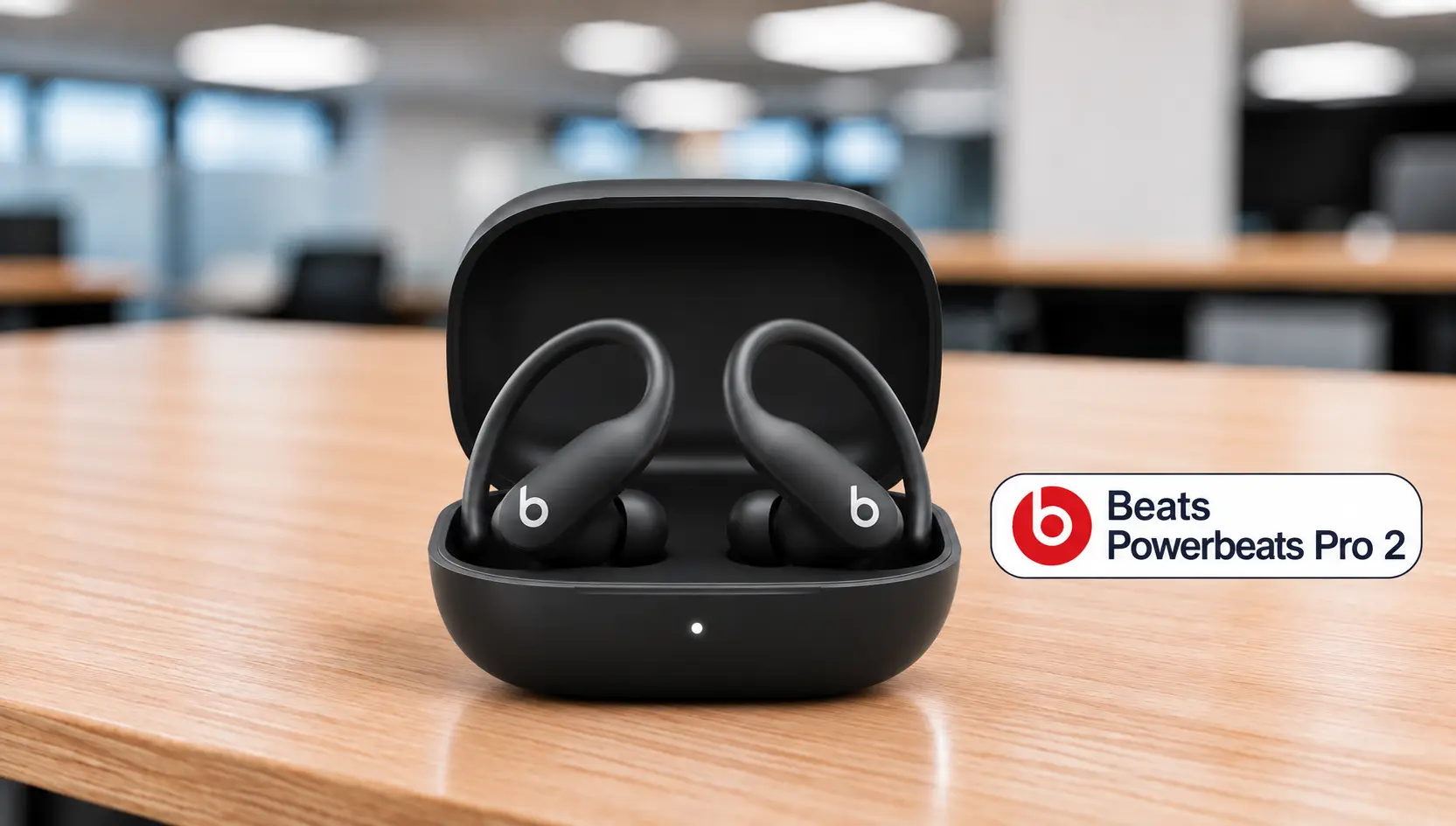
The hook design keeps them in place during a workout, and the controls are a “b” button and a volume button. Both the Powerbeats Pro 2 and the AirPods Pro 2 connect over Bluetooth 5.3 and pair instantly with iPhones. For running and the gym we would take these over the AirPods Pro 3.
AirPods Max 2
The AirPods Max 2 are over-ear headphones, so they are not earbuds, but they belong on this list. Apple announced them on 16 March 2026 for the same $549 as the first model, with orders from 25 March and shipping in early April. They carry two H2 chips that replace the two H1 chips of the original, and they borrow the digital amplifier from the AirPods Pro 3. Battery life is up to 20 hours with noise cancellation on. They use Bluetooth 5.3, where the first model used Bluetooth 5.0, and a USB-C cable gives lossless audio at 24-bit and 48 kHz. The noise cancellation is rated up to 1.5 times more effective than on the original.
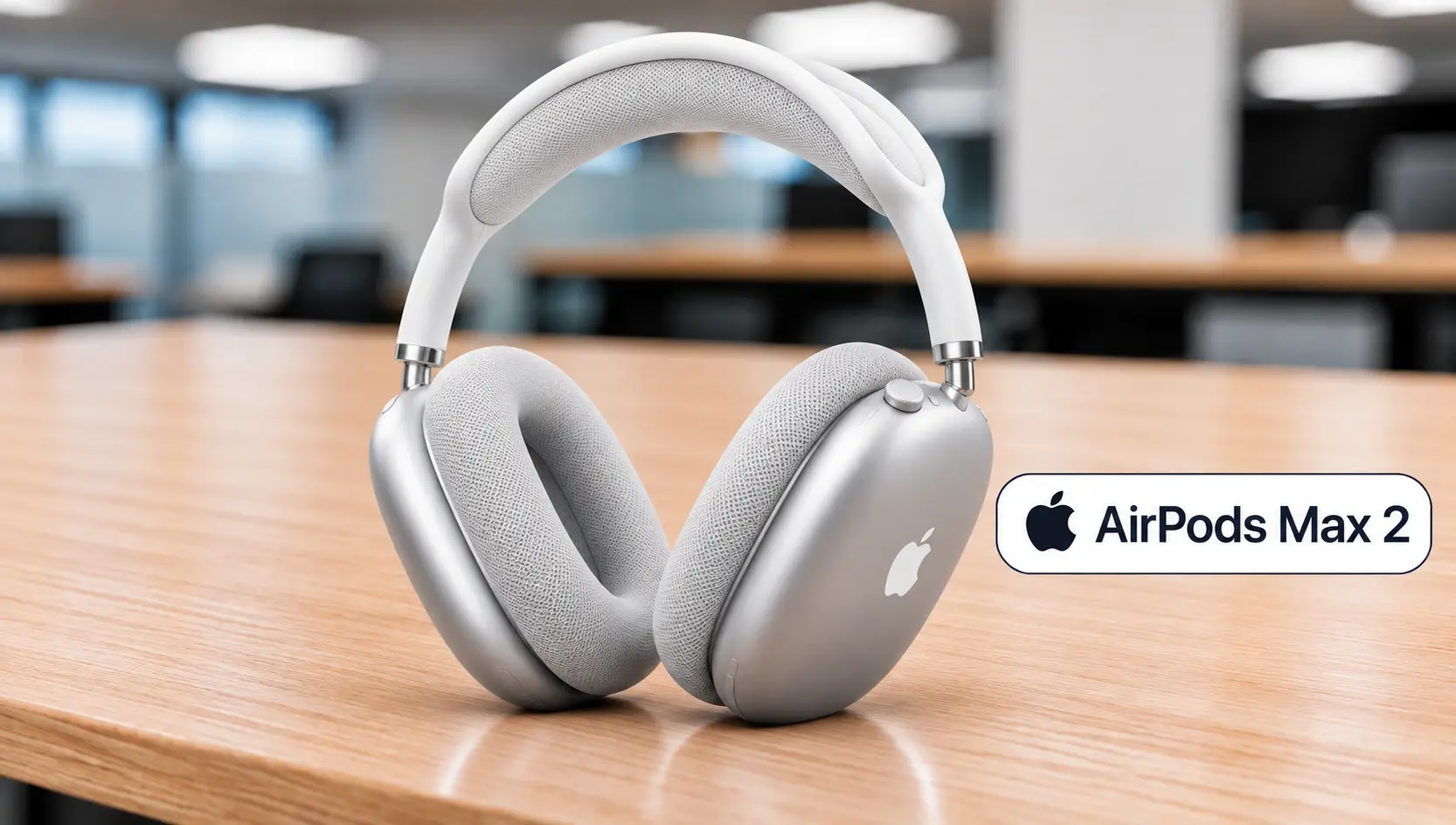
The new features are Live Translation, Adaptive Audio, Conversation Awareness, Voice Isolation, studio-quality audio recording, Loud Sound Reduction, Siri interactions with head gestures and Camera Remote. The outside of the headphones did not change, so you cannot tell the AirPods Max 2 from the first model by the design.
Which Earbuds and Headphones Do Not Have the H2 Chip?
Knowing which earbuds lack the chip saves you from a wrong purchase, especially on the used market. These models run on older chips:
- AirPods 2: H1 chip, about 5 hours of battery life and no water resistance
- AirPods 3: H1 chip, no noise cancellation, about 6 hours of battery life and an IPX4 rating, with either the Lightning or the MagSafe charging case
- AirPods Max, 2020: H1 chip
- AirPods Max, 2024 USB-C: still the H1, because that update only added a USB-C port and new colors
- Beats Powerbeats Fit: H1 chip, launched on 30 September 2025 as the successor to the Beats Fit Pro, at $200
- Beats Fit Pro: H1 chip
- AirPods, first generation: the older W1 chip
The Beats Solo Buds use a custom Beats chip and work with both iPhones and Android phones. For the other Beats models we could not confirm the chip in a reliable source, so we leave them off the list instead of guessing. If you want noise cancellation, move up to a pair with the newer chip, because the AirPods 2 and AirPods 3 do not have it at all.
Is There an H3 Chip?
Not in any product Apple sells today. Reports said Apple was working on an H3 for the AirPods Pro 3, but that pair launched with the H2. Later reports pointed to an H3 for the AirPods 5 and a future AirPods Pro, but Apple lists the H2 for both AirPods 5 models. It is the same chip as in the AirPods 4 and the AirPods Pro 3.
What Is the H2 Chip?
The H2 is an audio chip made by Apple, and it sits inside the earbuds, not in your phone. Apple has used its own chips since the first AirPods, which ran on the W1. The H1 came next in the AirPods 2, and the newest chip arrived with the AirPods Pro 2.
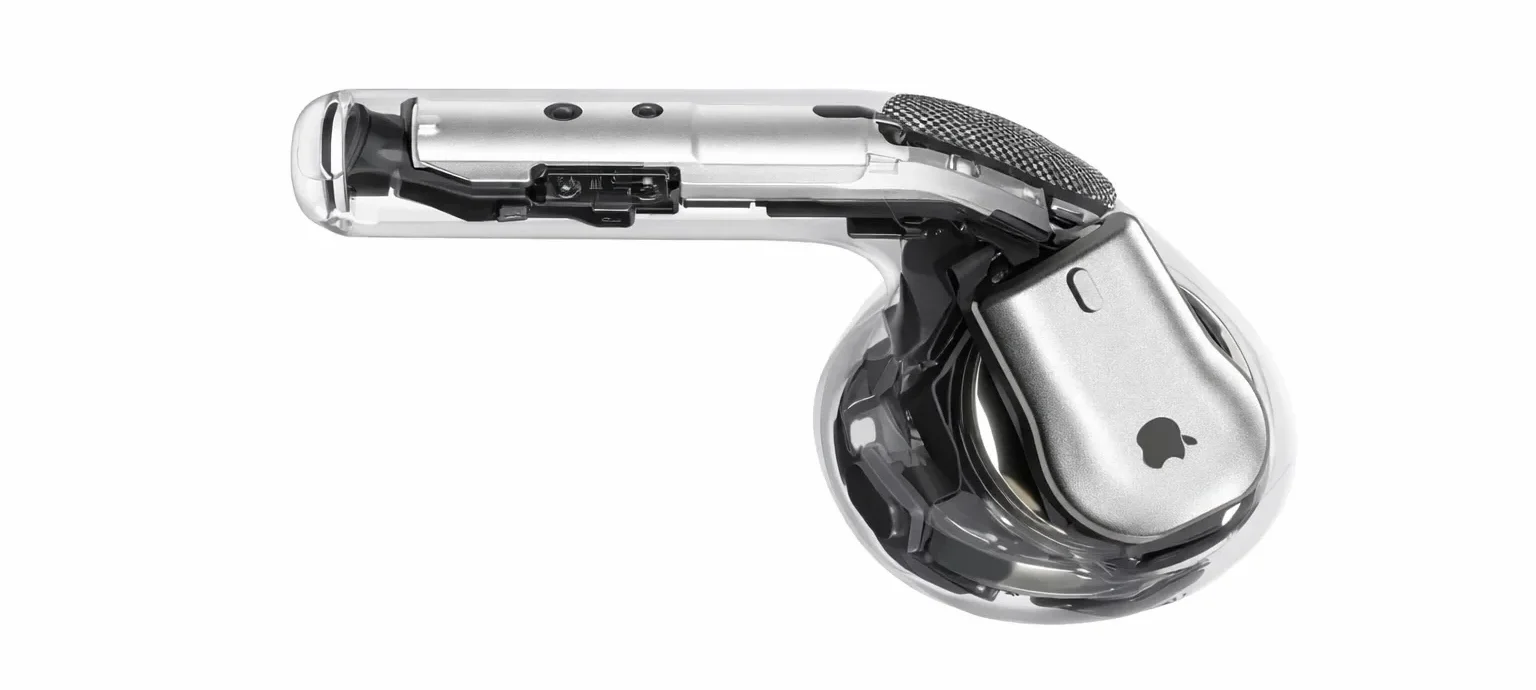
The short version looks like this:
- W1: the first AirPods
- H1: the AirPods 2, AirPods 3, the first AirPods Max, Beats Fit Pro and Powerbeats Fit
- H2: every model in the table above
- U1: a separate chip for ultra-wideband, which is not part of this audio line
A chip made for earbuds matters because it handles noise cancellation, pairing and battery use at the same time. A highly optimized processor saves more battery than a generic one. The jump from the W1 to the H1 gave the AirPods up to three hours of talk time instead of two and up to five hours of audio playback.
H2 vs H1: What Changed
The H2 keeps everything the H1 did, and it adds more. The H1 brought active noise cancellation support, in-ear detection, quick switching between devices and hands-free Siri. It shortens the pairing time, improves noise cancellation and adds Adaptive Transparency Mode. It also runs computational audio algorithms that adapt to the shape of your ear.
That is also why the AirPods Max 2 use two of these chips in place of the two H1 chips of the first model. In short, the H1 does the basics well, and the newer chip leaves more room for new features.
W1 vs H1: Where It Started
The first AirPods used the W1, and the second generation moved to the H1. Compared with the W1, the H1 improved the pairing speed, lowered the latency and moved the connection from Bluetooth 4.2 to Bluetooth 5.0. It also allowed Siri to launch by voice instead of a double tap, and it introduced Audio Sharing, which lets more than one pair of AirPods connect to one device. These benefits apply when the earbuds are paired with an iPhone or iPad.
What the U1 Chip Is For
The U1 sits in the charging case of the AirPods Pro 2, not in the earbuds. It is an ultra-wideband chip that helps an iPhone 11 or later find a lost case, together with a small speaker in the case that plays sounds. It has nothing to do with how the earbuds sound.
Benefits and Downsides of an Audio Chip
The chip drives the sensors inside the earbuds, which is why they behave differently from regular Bluetooth earbuds. The benefits are easy to list:
- In-ear detection: audio pauses when you take an earbud out, and the earbuds save power when you stop listening.
- Easier pairing: after the first pairing, the earbuds connect to your other devices signed in with the same iCloud account.
- A stable connection: it holds up better than on regular Bluetooth earbuds, though you can still hear some stuttering far from the iPhone.
- Clearer calls: the earbuds detect when you speak and filter background noise.
The downsides are just as clear. The pairs cost more than regular earbuds, Android users miss out on the extra features, and these chips do not seem to be licensed to other makers, so they only appear in Apple and Beats products. The earbuds are also tied to your iCloud account, which makes them less convenient to lend to a friend or partner.
What the H2 Chip Does
The chip does not add one big feature. It makes a group of features possible, and Apple keeps adding to the group through software updates.
Noise Cancellation and Transparency
This is the main reason to buy one of these pairs. The chip improves active noise canceling compared with the H1 and adds Adaptive Transparency Mode, which lets outside sound in while the earbuds are in your ears. Adaptive Transparency Mode samples the noise around you 48,000 times per second. Adaptive Audio blends transparency and noise cancellation in real time and adjusts when your surroundings change. Loud Sound Reduction cuts loud, low-frequency sounds such as lawn mowers and construction equipment, but it does not protect against gunshots, fireworks or other sudden bursts. The AirPods Max 2 show how far it goes, because they have no ear tips and still cancel noise, with two chips doing the work.
Sound: Spatial Audio, Adaptive Audio and Custom EQ
The chip powers personalized spatial audio and Adaptive Audio, and Adaptive EQ is another feature in the group. Adaptive EQ uses inward-facing microphones to sample what you hear and adjusts the sound in real time, so it stays consistent across different fits and ear shapes. Personalized Volume learns your volume preferences in different places and adjusts on its own. iOS 27 adds Custom EQ, which lets you adjust bass and treble yourself. The AirPods Max 2 also borrow the digital amplifier from the AirPods Pro 3, so the sound is not only about the chip. If you care about sound, these settings matter more than the chip name.
Calls, Talking and Translation
For calls, the chip powers Voice Isolation, Conversation Awareness and head gestures for answering calls. Conversation Awareness lowers the music when you start talking, boosts nearby voices so you can answer, and brings the volume back when you finish. Voice Isolation is a noise reduction feature for the microphone, similar to what we describe in our guide to AI ENC. The AirPods Max 2 add studio-quality audio recording, Camera Remote and Siri interactions with head gestures. Live Translation is available on the AirPods Pro 3 and the AirPods Max 2, and it depends on the phone and the software as well.
Pairing, Switching and Audio Sharing
Pairing is the part most people notice first. Setup takes one tap, and the earbuds can be switched to any device signed in with your Apple ID. They also move on their own between an iPhone, iPad, Mac and Apple Watch as you use each one. Audio on an iPhone, iPad or Apple TV can be shared with two sets of AirPods.
Best Audio on an iPhone
The chip gets the most out of what an iPhone can do with audio, with better sound, noise cancellation and transparency modes. On an Android phone the same chip does not give the same pairing or the other benefits.
What the H2 Chip Does Not Do
The chip has limits, and it helps to know them before you spend money.
- No AI on its own. The AirPods Pro 2, the AirPods Pro 3 and the AirPods 4 cannot run AI work by themselves, so features of that kind rely on the iPhone and the software.
- No noise cancellation on every model. The standard AirPods 4 have the chip and no active noise cancellation, so check the version, not only the chip.
- No full feature set on Android. The smart features need an Apple device.
- No lossless audio over Bluetooth. The AirPods Pro 2 and the other pairs still send sound over Bluetooth, which cannot carry Apple Lossless files. We explain the options in our guide to Bluetooth codecs.
Apple describes the H2 as a platform with room for more features, so new settings can still arrive through firmware updates. That is the main reason to prefer an H2 pair over an H1 pair when you plan to keep the earbuds for years.
What Runs on the Earbuds and What Needs an iPhone
The chip is only half of the answer. Some features run on the earbuds alone, and others also need a newer iPhone, a new version of iOS or a supported region. For the AirPods 5 the split is clear, and it is a good guide for the other models on the list.
| Feature type | What it needs | Examples |
|---|---|---|
| Sound and noise features | The earbuds, even with an older iPhone | Active noise cancellation, Adaptive Transparency Mode |
| Translation and the new assistant | A newer iPhone, iOS 27 and a supported region | Live Translation, Siri AI |
If you pair the AirPods 5 with an iPhone that cannot run the new software, you still get every sound feature, and you lose the translation and the new assistant. The iPhone 18 Pro meets the requirements, and so does every iPhone with Apple Intelligence before it. Before you buy for the new features, check what your phone can run.
H2 Chip on Android
Basic Bluetooth pairing works on Android, so you can listen to music and take calls. The smart features need an Apple device, and the chip does not give the same fast pairing on an Android phone. In practice an Android owner pays for features that they cannot use, and we would not buy most of these pairs for an Android phone. The exception is the Powerbeats Pro 2, where most features work through the Beats app, including control customization and heart-rate data. For everything else, our list of Snapdragon Sound headphones and earbuds is a good place to start.
How to Check Which Chip Your Earbuds Have
You cannot read the chip off the earbuds, so you check the model. The method is simple:
- Find the exact model name on the box, in the order confirmation or in the listing, and match it to the table above.
- Remember that the AirPods 4 and the AirPods 4 with Active Noise Cancellation share the H2, so the version does not change the chip.
- Be careful with the AirPods Max. The AirPods Max 2 look the same from the outside as the first model, and the 2024 USB-C model still has the H1, so only the AirPods Max 2 has the newer chip.
On the used market, ask the seller for the exact model and generation, because “AirPods Pro” alone could mean the first generation, which was released before the H2 existed.
Powerbeats Pro 2 vs AirPods Pro 2: Which One?
Both pairs share the chip, so the choice comes down to the rest. The Powerbeats Pro 2 last up to 10 hours per earbud with noise cancellation off and 45 hours with the case, while the AirPods Pro 2 measure about 5 hours and 43 minutes per earbud with noise cancellation on. Noise cancellation is nearly identical in measurements. The AirPods Pro 2 sound more balanced and measure better on distortion, while the Powerbeats Pro 2 have boosted bass and treble, which is fine for workouts and less so for critical listening.
Neither microphone is exceptional. Both cases charge over Qi, MagSafe, Apple Watch chargers and USB-C, both pairs of earbuds are IPX4, and both cost about $249 to $250. On Android most of the Powerbeats Pro 2 features work through the Beats app, and the AirPods Pro 2 lose most of theirs. We would choose the Powerbeats Pro 2 for workouts, battery life and Android phones, and the AirPods Pro 2 for everyday listening and a smaller case.
Do You Need an H2 Pair, and Should You Upgrade?
Not everyone does. We would sort it like this:
- You use an Android phone: skip it, because the smart features need an Apple device, unless you pick the Powerbeats Pro 2.
- You want noise cancellation on an iPhone: go for the AirPods Pro 2 or newer, or the AirPods 4 with Active Noise Cancellation.
- You only want music and calls: an H1 pair such as the AirPods 3 is enough.
- You want the newest software features: pick a pair with the newer chip, but check your iPhone first.
- You plan to keep the earbuds for years: the newer chip is the safer buy, since Apple keeps adding features to it.
- You own the AirPods 2 or AirPods 3: the jump to an H2 pair gives you noise cancellation, which neither of them has.
- You own the AirPods Pro 2: there is no chip reason to upgrade to the AirPods Pro 3, because both have the same one.
- You own the first AirPods Max: this is the strongest case for an upgrade, because the AirPods Max 2 bring better noise cancellation and the whole feature set.
- You own the 2024 USB-C AirPods Max: upgrade only if those features matter to you every day. A first-time buyer should take the AirPods Max 2, since the price is the same $549.
In every case the exact model matters more than the chip name.
Which H2 Earbuds Should You Buy?
We pick by situation, since the chip is the same in all of them. This table shows the eight models side by side, with the battery life as Apple lists it with noise cancellation on, except where the table says otherwise.
| Model | Noise cancellation | Battery per charge / with case | Water resistance | Price we could confirm |
|---|---|---|---|---|
| AirPods Pro 2 | Yes | 6 h / 30 h | IP54 | Check the current price |
| AirPods Pro 3 | Yes | 8 h / 24 h | IP57 | $249 list price |
| AirPods 4 | No | 5 h / 30 h | IP54 | Check the current price |
| AirPods 4 with Active Noise Cancellation | Yes | 4 h / 20 h | IP54 | Check the current price |
| AirPods 5 | Yes, standard | 4 h / 20 h | IP57 | $129 |
| AirPods 5 with Wireless Charging Case | Yes, standard | 5 h / 22 h | IP57 | $149 |
| Beats Powerbeats Pro 2 | Yes | 10 h / 45 h, noise cancellation off | IPX4 | $250 |
| AirPods Max 2 | Yes | 20 h | Not stated | $549 |
Best all-round: AirPods Pro 3. Five ear tip sizes, a stable fit and strong noise cancellation make them the pair we would buy for most iPhone owners.
Budget: AirPods 5. At $129 you get the chip and noise cancellation as standard. The $149 version adds the wireless charging case and on-stem volume controls.
Workouts: Powerbeats Pro 2. The hook keeps them in place, and heart-rate monitoring is built in.
Over-ear: AirPods Max 2. They are the only over-ear pair on this list.
If you do not need this chip, other earbuds can be a better value, and we list the options in our guide to the best wireless earbuds.
Earbuds With Other Chips: Options for Android
Apple is not the only company that builds its own audio chips. Android phones work with earbuds built on chips from Qualcomm (the QCC and CSR series), MediaTek and Broadcom, and they are competitive with the H1 and H2 for Android users. A chip made for audio matters for the same reasons on every phone. It handles noise cancellation, pairing and battery use, and a well optimized chip saves a lot of battery compared with a generic design.
So for an Android phone we would shop by the chip, the codec and the noise cancellation, not by the name on the box. If you want to know how these chips differ, we compared the main ones in our guide to wireless earbud chips.
FAQ
Do the AirPods 4 have the H2 chip?
Yes. Both versions of the AirPods 4, the standard one and the one with Active Noise Cancellation, use the same chip as the AirPods Pro 2. Only the second version has noise cancellation.
Do AirPods Pro 3 have the H2 chip?
Yes. A new H3 chip was expected in the AirPods Pro 3, but Apple kept the H2, and its comparison page lists the same chip for this pair.
Does the Powerbeats Pro 2 have the H2 chip?
Yes, it is the only Beats earbud with this chip that we could confirm. The Powerbeats Fit and the Beats Fit Pro use the H1.
Is there an Apple H3 chip?
Not in any product Apple sells at the moment. The H3 has only appeared in reports, and Apple lists the H2 for the AirPods 5.
Do the H2 features work on Android?
Only the basics on most models. Bluetooth pairing, music and calls work on an Android phone, but the smart features need an Apple device. The Powerbeats Pro 2 is the exception, because most of its features work through the Beats app.
Conclusion
So, which earbuds have H2 chip? The AirPods Pro 2, AirPods Pro 3, AirPods 4, AirPods 5 and the Beats Powerbeats Pro 2, plus the AirPods Max 2 if you want over-ear headphones. The AirPods 2, AirPods 3, Powerbeats Fit, Beats Fit Pro and both older AirPods Max models do not have it.
Match the exact model name, check what your iPhone can run and pick by price and use. For most people we would go with the AirPods Pro 3, or with the AirPods 5 if the budget is tight.