You pick up a pair of headphones and notice “NC” printed on the side. Maybe there’s a button with that label. The product description mentions it as a feature. But what does NC mean, and does it matter?
NC stands for Noise Cancelling. The technology uses microphones and electronics to reduce background sounds. Some models do this well. Others barely make a difference. The gap between cheap and expensive options surprised me more than anything else about this feature.
How NC Works in Plain English
Headphones with NC use built-in microphones to listen to sounds around you. The electronics analyze that noise and create opposite sound waves. When these opposing waves meet, they cancel each other out. The result is quieter surroundings.
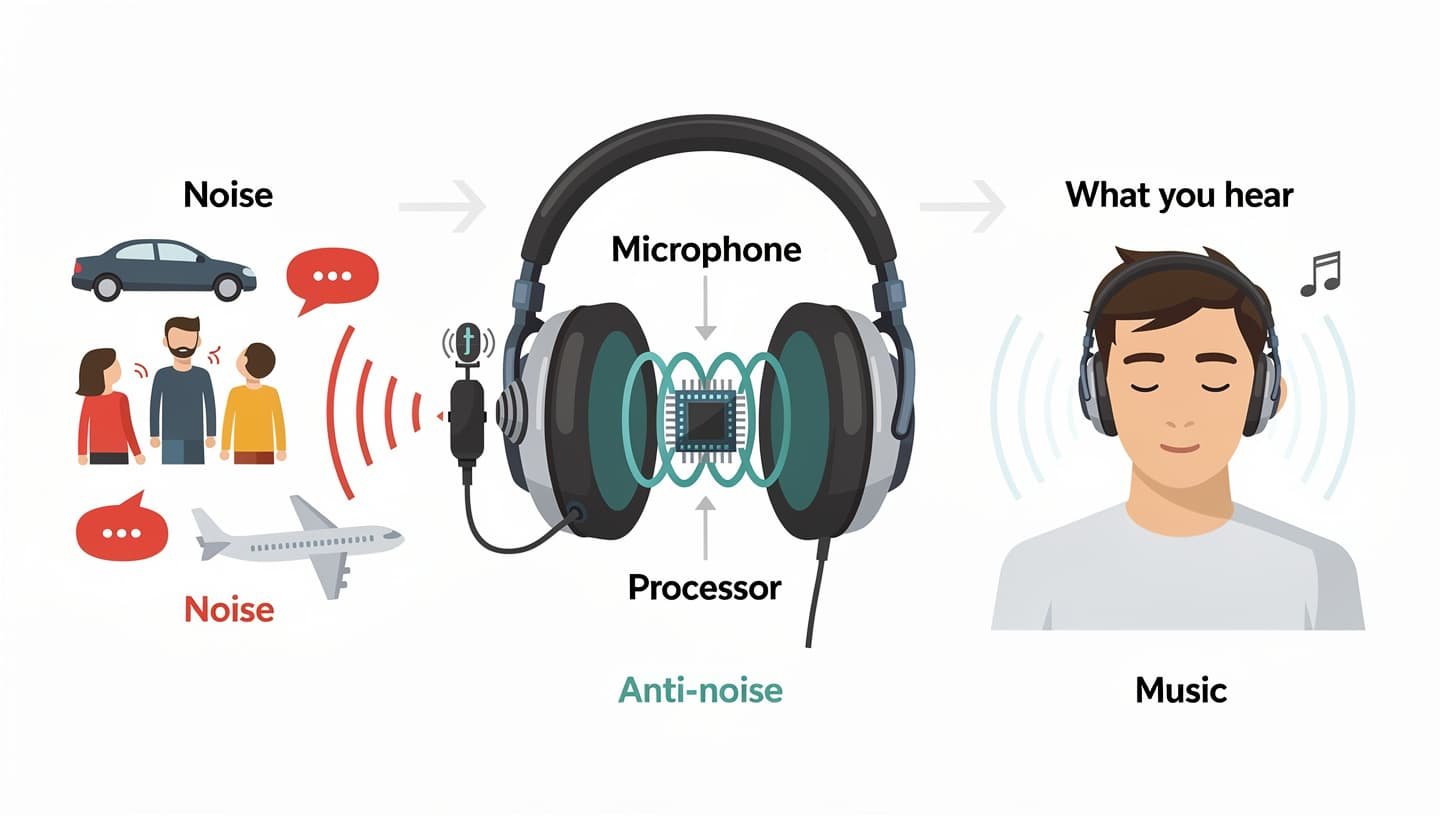
This works best on constant, low-frequency sounds. Engine rumble on planes. Bus noise. Office air conditioning. Fan hum. These steady noises get reduced noticeably.
Higher-pitched or sudden sounds don’t cancel as well. Voices cut through. A dog barking nearby stays audible. Someone dropping keys on a desk comes through clearly. The technology has limits.
When NC Makes a Real Difference
Airplanes convinced me NC was worth having. The constant engine drone fades to almost nothing with good noise cancelling. What used to feel like sitting inside a vacuum cleaner becomes tolerable. Music plays at comfortable volumes instead of dangerously loud levels needed to overcome the background roar.
Long train or bus commutes benefit similarly. That steady rumble and vibration noise drops significantly. You stop cranking volume just to hear lyrics or dialogue clearly.
Open offices present another good use case. Coworkers typing. Printers humming. HVAC systems running. The hum
of fluorescent lights. All that constant background noise pulls back with NC engaged.
Working from home with appliances running helps too. Fridge compressors. Dishwashers. Washing machines in the next room. NC lets you focus without those sounds intruding constantly.
When NC Doesn’t Help Much
Quiet rooms reveal NC’s first problem. In already-silent spaces, you hear a faint hiss when NC activates. Some models produce more of this than others. The hiss becomes the new annoying background sound.
Conversations and voices prove difficult for NC to block. The technology struggles with irregular, mid-range frequencies. You’ll still hear people talking nearby. If that’s the main noise bothering you, NC won’t solve it.
Wind creates issues outdoors. The microphones pick up wind noise and try to cancel it, which often makes things worse. Many people turn NC off when walking outside for this reason.
Music-filled coffee shops or busy restaurants don’t get much quieter either. The mix of changing sounds, voices, and random noises at various frequencies doesn’t cancel well. You might notice 10-15% reduction at best.
The NC Button People Actually See
Many headphones include an NC button or switch. Sony popularized the NC/AMB setup where one button cycles through modes.
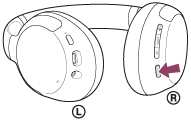
NC mode blocks outside noise. AMB (Ambient) mode does the opposite – it uses the same microphones to let outside sound in so you hear your surroundings while wearing headphones. Some brands call this transparency mode or hear-through.
The button typically cycles: NC on, AMB on, both off. Which mode helps depends entirely on what you’re doing.
Walking in traffic? Use AMB to hear cars approaching. Flying on a plane? NC all the way. Sitting in a quiet home office? Turn both off to avoid the hiss.
For Sony-specific models and how their NC/AMB button works in detail, check this guide on NC/AMB settings.
Active vs Passive Noise Blocking
Headphones reduce noise two ways. Active NC uses electronics and battery power. Passive blocking relies on physical design.
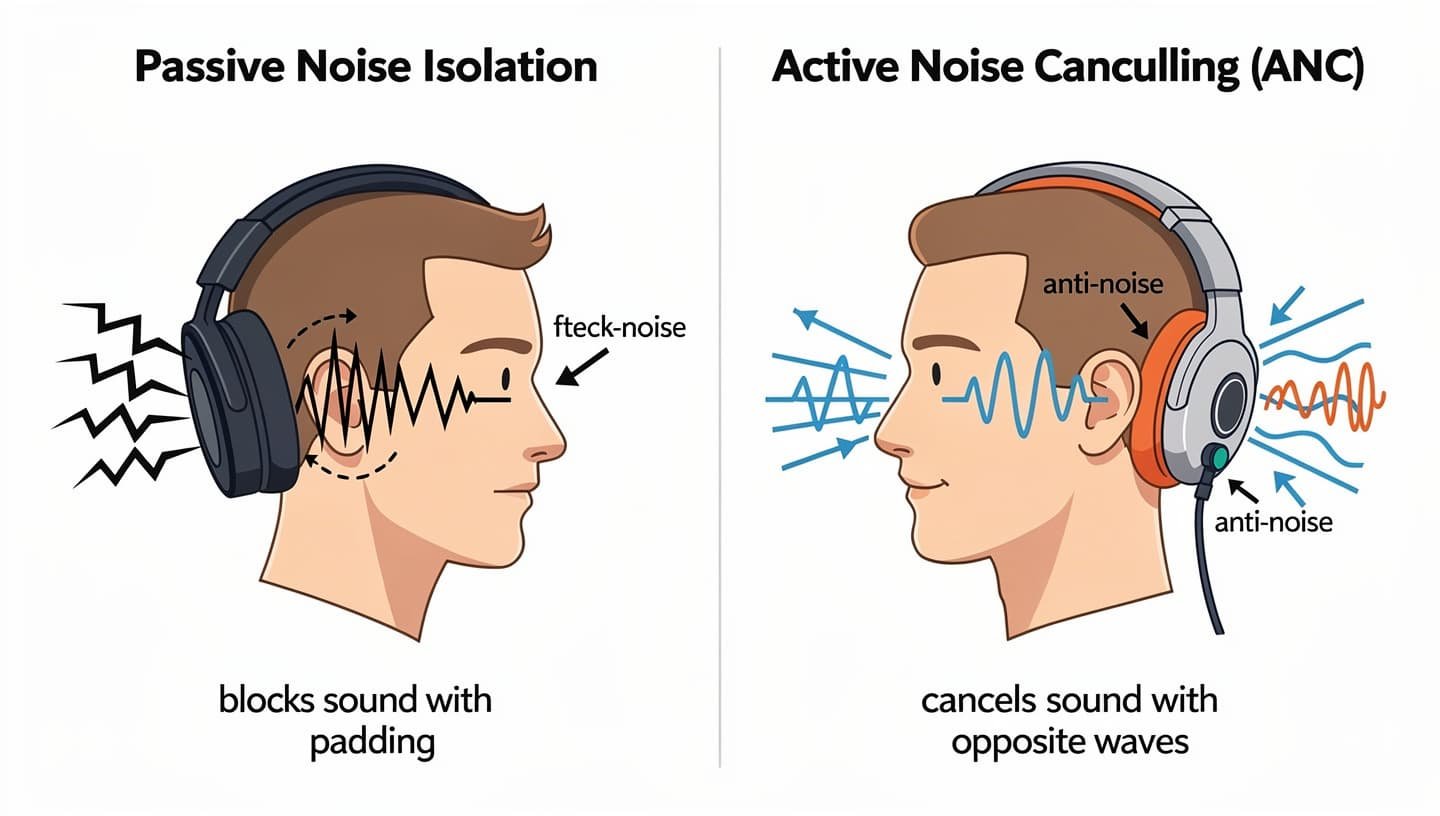
Over-ear headphones with thick padding create passive isolation by sealing around your ears. In-ear models with silicone tips block noise by plugging your ear canal. This passive approach works on all frequencies without needing power.
Most modern headphones combine both. The physical seal handles higher frequencies. Active electronics tackle low frequencies. Together they cover more of the sound spectrum than either method alone.
Cheap headphones sometimes advertise NC when they only offer passive isolation. True active noise cancelling requires microphones, processing chips, and battery power. If a $20 pair claims NC, it’s probably just good ear cup padding.
Battery Life Impact
NC drains battery noticeably. Exact numbers vary by model, but expect 20-40% shorter runtime with NC enabled.
The Soundcore Life Q30 drops from 60 hours to 40 hours when NC runs. Still plenty, but the decrease is real. The TOZO NC20 Pro goes from 13 hours to 10 hours.
For long flights or full workdays away from chargers, that reduced battery life matters. Some people leave NC off until they actually need it to preserve runtime.
At home where charging is easy, the battery impact barely registers as a concern.
Why Some People Can’t Stand NC
Not everyone tolerates active noise cancelling comfortably. A pressure sensation bothers some users. It feels like being on an airplane during descent or driving through mountains. Your ears sense something even though nothing’s physically pressing on them.
This sensation comes from the anti-noise sound waves. Some people get used to it after a few days. Others never adjust and can’t wear NC headphones for more than a few minutes.
A faint hiss accompanies most NC implementations. Better headphones minimize it, but it’s usually there. In quiet environments, that hiss becomes obvious and distracting. Turning NC off eliminates it immediately.
The “processed” sound quality bothers audio purists. Music doesn’t sound quite natural with NC engaged. Instruments lose some sparkle. Vocals feel slightly more distant. The effect is subtle but real.
If you’re considering noise cancelling headphones, try them in a store first if possible. The comfort and tolerance issues can’t be predicted. Some people love NC from minute one. Others hate it immediately.
Quality Differences Between Brands
Sony and Bose lead in NC performance. Their flagship models block 80-90% of ambient noise in real-world testing. The Sony WH-1000XM5 handles mixed environments better than anything else at any price.
Mid-tier brands like Soundcore, JBL, and Edifier deliver 60-70% reduction for significantly less money. Good enough for most people’s needs. The difference becomes obvious when comparing side-by-side, but in isolation, these work fine.
Budget options under $50 manage maybe 30-40% noise reduction. Better than nothing, but not impressive. The TOZO models at $30-60 perform better than most in this price range.
The gap in performance justifies the price difference if you fly frequently or work in genuinely noisy environments. For occasional use, mid-tier options offer better value.
Does NC Work Without Music Playing?
Yes, and this surprises people. NC functions independently of audio playback. You can wear headphones with NC on and nothing playing just to make your surroundings quieter.
Some people use NC headphones as high-tech earplugs. Sleeping on planes. Studying in noisy dorms. Focusing during loud home renovation next door. The silence itself becomes the feature.
Music or podcasts playing makes NC more effective at covering remaining sounds. But the noise reduction happens either way.
Can You Turn NC Off to Save Battery?
Almost all NC headphones include an off switch or button. This extends battery life and eliminates the pressure sensation when you don’t need noise reduction.
Models vary in how this works. Some have a physical switch. Others use button presses to cycle through modes. A few require app settings to disable NC.
Check product specifications before buying if you want easy NC control. Not being able to turn it off without digging through phone apps gets annoying quickly.
Is NC Safe for Hearing?
NC doesn’t damage hearing. The anti-noise sound waves operate at safe volumes. No evidence suggests any harm from the technology itself.
In fact, NC potentially protects hearing by letting you listen at lower volumes. Without NC in noisy environments, people crank volume dangerously high to overcome background noise. NC eliminates that need.
The pressure sensation some people feel isn’t harmful either. Uncomfortable for some, sure, but not dangerous.
NC for Different Situations
Frequent flyers benefit most from NC. The constant engine noise and cabin pressure sounds vanish. Long flights become tolerable without NC fatigue or excessive volume levels.
Commuters on trains and buses gain significant improvement. Daily exposure to rumbling transit noise gets old fast. NC makes the commute more peaceful.
Open office workers appreciate the focus NC enables. Constant background chatter and keyboard clicking fades. Concentration improves when ambient noise disappears.
Students in dorms or shared living spaces use NC to create quiet study environments. Roommates, hallway noise, and neighboring apartments become less intrusive.
People working from home with kids or pets find NC helpful during video calls or focused work time. Background noise reduces enough to maintain concentration.
For casual home listening in already-quiet spaces, NC offers minimal benefit. The added cost, battery drain, and potential for hiss outweigh any advantage.
Gaming with NC depends on the game type. Single-player story games work fine. Competitive multiplayer suffers from the slight audio processing delay NC introduces. See the best gaming headphones guide for better gaming-specific options.
Should You Pay Extra for NC?
If you regularly encounter loud environments – planes, trains, busy offices, construction zones – yes. NC makes those situations significantly more comfortable. The improvement justifies the cost difference.
For occasional travel or generally quiet daily life, maybe not. Basic passive isolation from good ear cup padding handles most casual noise without the complexity and battery drain of active cancelling.
Budget matters too. Spending $300+ on Sony or Bose makes sense for daily commuters or frequent travelers. Spending that much for weekend headphone use at home seems wasteful.
Mid-tier NC options around $80-150 offer a reasonable compromise. Good enough performance without flagship prices. Check out wireless earbud recommendations for more budget-friendly options with decent NC.
Common NC Problems
Firmware updates occasionally break NC performance. Sony and Bose both released updates that reduced NC effectiveness, causing customer complaints. Sometimes these get fixed in subsequent updates. Sometimes they don’t.
Microphones get blocked by hats, hoods, or hair. NC needs those mics exposed to work properly. Covering them prevents proper noise detection and cancellation.
Wind noise outdoors makes NC useless or even counterproductive. The rushing air sound confuses the microphones. Many people automatically disable NC when stepping outside.
Battery degradation over time affects NC performance. As rechargeable batteries age and lose capacity, NC strength often decreases. A two-year-old pair might not cancel noise as well as when new.
Frequently Asked Questions
What does NC mean on headphones?
NC means Noise Cancelling. It’s technology that uses microphones and electronics to reduce background noise. Works best on constant, low-frequency sounds like airplane engines or bus rumble.
Does NC work without music playing?
Yes. NC functions independently of audio playback. You can wear headphones with NC on and nothing playing just for the quiet. Some people use them as high-tech earplugs.
Can I turn NC off to save battery?
Most NC headphones have an off button or switch. This saves battery and eliminates the slight pressure sensation when you don’t need noise reduction. Check product specs to confirm this feature exists.
Does NC hurt your ears?
No. NC doesn’t damage hearing. Some people feel an uncomfortable pressure sensation, but it’s not harmful. In fact, NC may protect hearing by reducing the need for dangerously loud volumes in noisy environments.
Is cheap NC worth it?
Budget NC ($30-50) reduces noise maybe 30-40%. Better than nothing, but not impressive. Mid-tier options ($80-150) deliver 60-70% reduction and usually offer better value than either budget or flagship models.
Why does NC make my ears feel weird?
The anti-noise sound waves create a pressure sensation some people notice. Feels similar to airplane cabin pressure or driving through mountains. Some users adjust after a few days. Others never get comfortable with it.
Does NC affect sound quality?
Yes, slightly. Music sounds less natural with NC active. The processing introduces a subtle artificiality. Audio purists notice it more than casual listeners. High-end models minimize this effect better than budget options.
Which is better, Sony or Bose NC?
Sony WH-1000XM5 currently leads in NC performance and features. Bose QuietComfort models excel at comfort and simplicity. Both cost $300-400. The difference comes down to whether you prioritize maximum NC (Sony) or wearing comfort (Bose).