Active noise cancelation has become a staple feature across the modern headphone industry. This technology appears in a decent selection of earbuds and wireless products, no longer reserved for the most expensive models. Each approach to canceling noise has implications for the type of sounds a headset handles best and audio quality. Not all implementations are equal though.
Active Noise Cancellation, or ANC, reduces unwanted ambient sounds through electronic circuitry rather than physical design alone. The technology stands apart from passive noise isolation, which relies on build quality and materials to block sound. Processing hardware in active systems cancels out external noise.
How Phase Cancellation Works
How ANC works forms around the foundation of phase cancellation. Acoustic pressure waves that travel through air molecules make up sound. Alternating peaks and valleys characterize these waves, similar to ripples in a pond. They cancel each other out as they combine when two sound waves are 180 degrees out of phase. Another’s trough aligns with one wave’s peak.
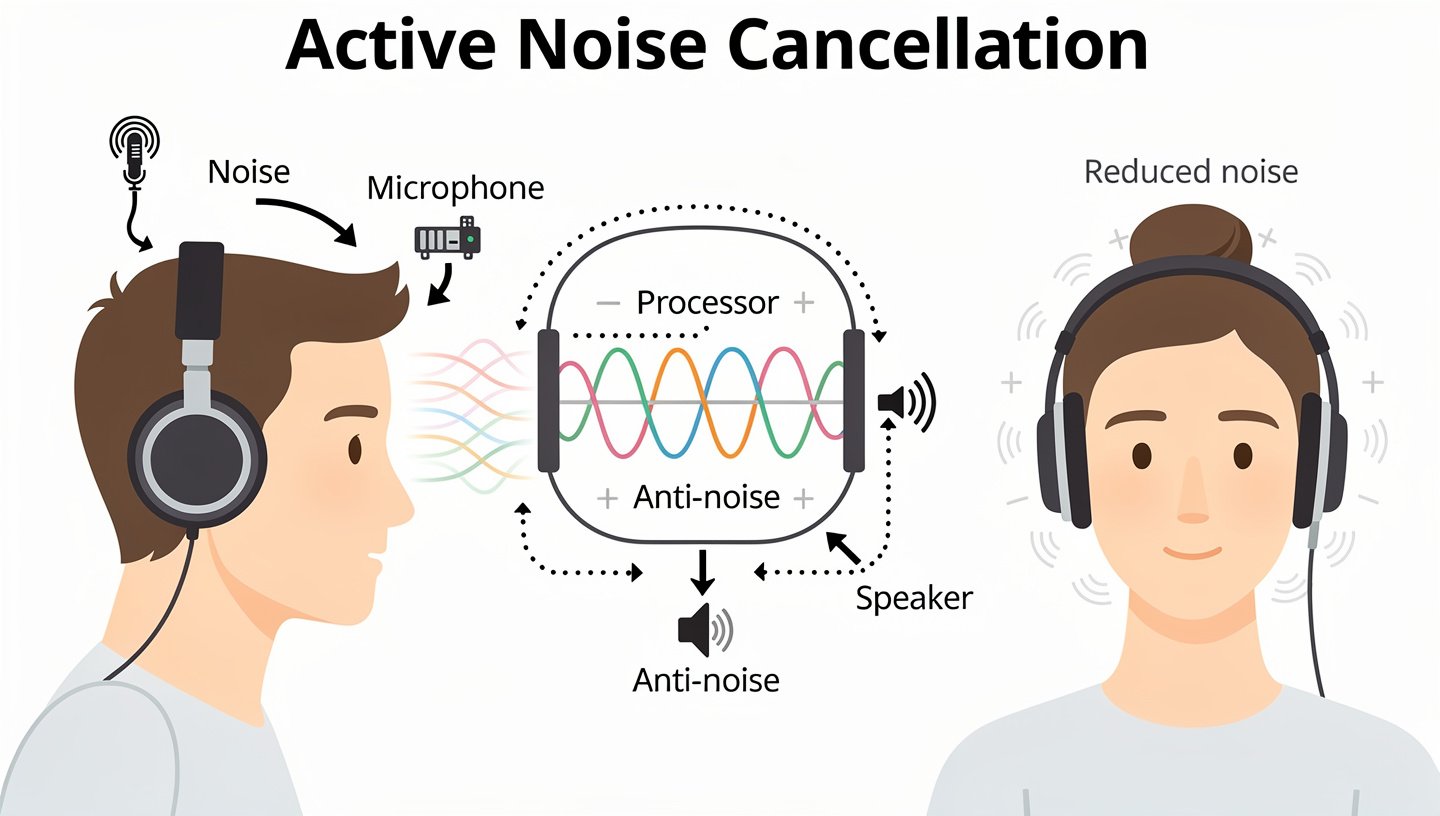
Microphones for capturing ambient noise, circuitry or programming to invert the captured signal, and speakers for transmitting the inverted audio make up the basic elements. A mirror image of unwanted sounds that neutralizes them at the point they reach your ear must be created by the system. This is anti-noise.
Sound waves originate from mechanical vibrations. Energy that can be disrupted or neutralized through destructive interference is carried by those waves. The opposing peaks and valleys cancel each other by capturing external sounds using microphones, analyzing the pattern, and replaying the signal with inverted phase. The amplitude reduces, potentially to nothing.
Watch a short video if ANC is working:
The Process Step By Step
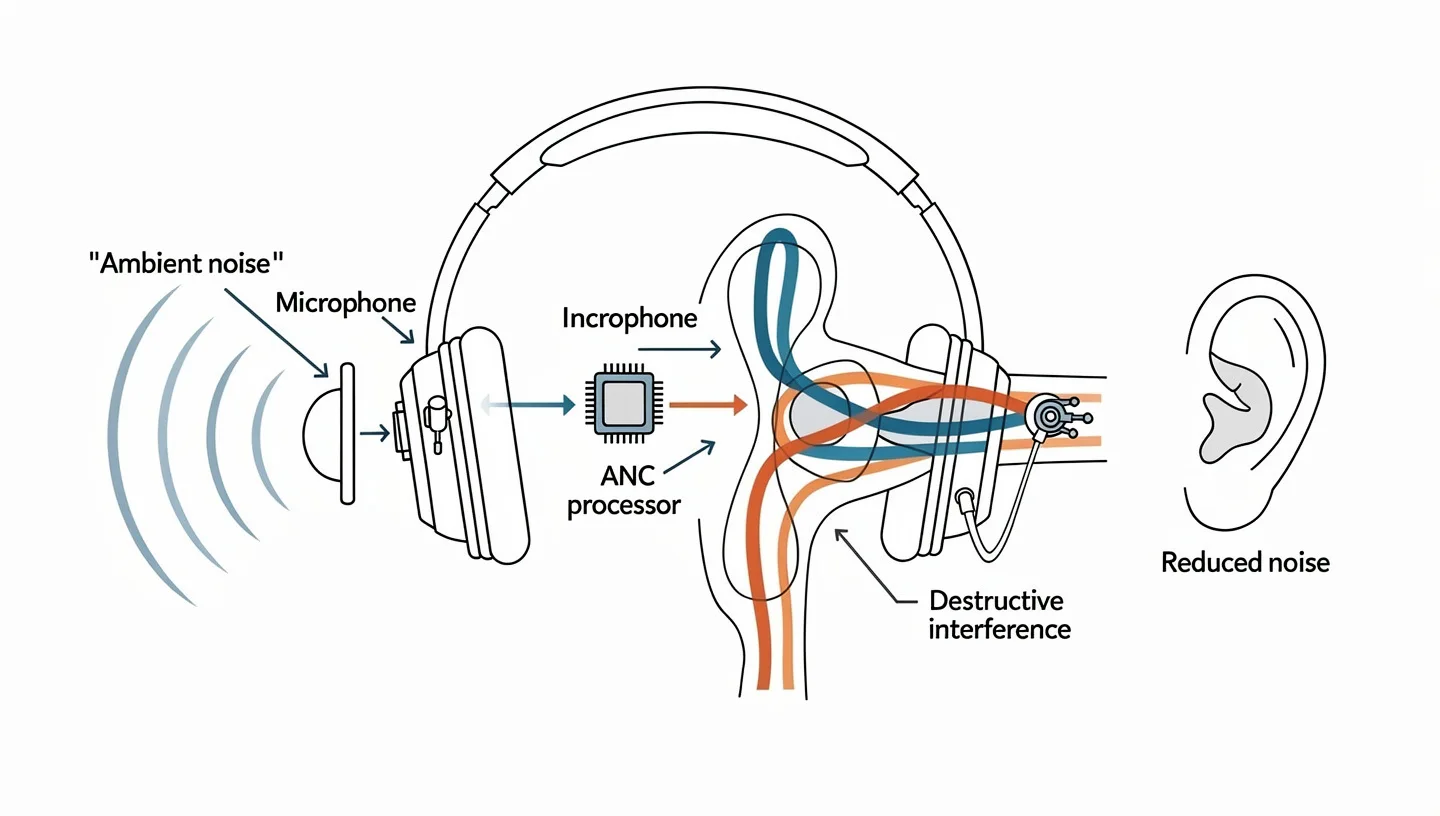
While ANC activates, the process happens continuously. Tiny microphones built into the headphones listen to sounds in your environment. Depending on the system type, these could be positioned on the outer housing of the earcups or inside near your ear canal.
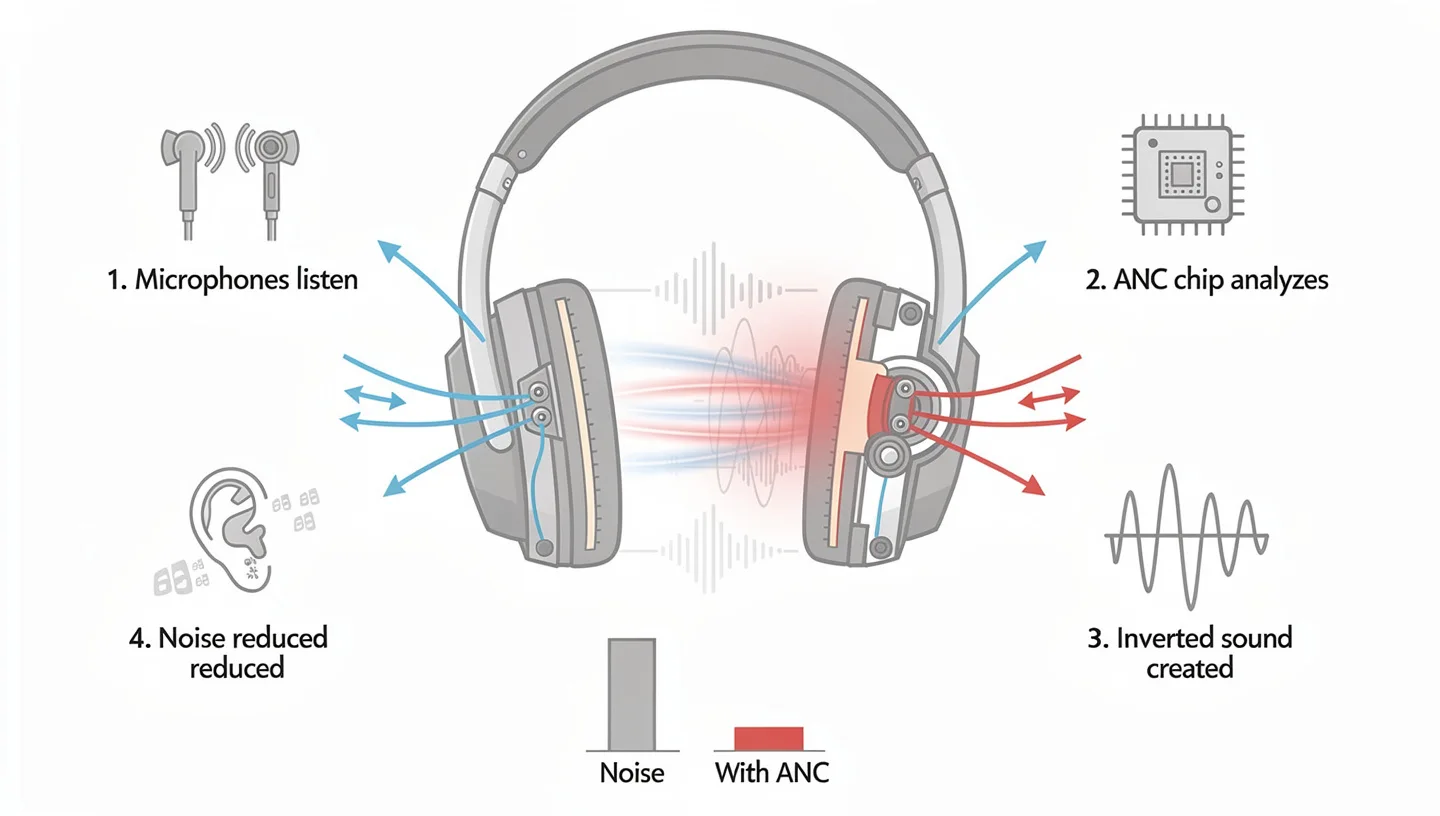
Incoming noise gets quickly measured by internal electronics. The noise pattern to what actually reaches inside the headphones gets mapped by a digital signal processor or dedicated ANC chip. This signal gets inverted by the processor, flipping the wave pattern to create the opposite phase. Through the headphone drivers, this inverted audio feeds into your ears.
They cancel through destructive interference when the original ambient sound and the anti-noise signal meet at your eardrum. Background sounds get reduced or eliminated. Depending on whether you’re playing audio, what you hear is your music or silence.
Between 20-40dB of noise reduction gets typically achieved by real-world performance. To roughly one-quarter or one-sixteenth of its original volume, this cuts the background noise level. Though not complete elimination, a considerable amount. Even the best systems have limitations.
Sampling ambient sounds accurately enough to provide the maximum degree of attenuation is the biggest issue with ANC. Noise must be captured precisely by microphones, and the phase of the cancellation waveform leaving the drivers needs to perfectly align with the noise phase when it reaches your ear. Fine tuning is needed by these systems. You won’t see 100% cancellation.
Types of ANC Systems
For implementing noise cancelation technology, multiple approaches exist. Distinct performance characteristics get created by where microphones sit and how the system processes signals.
Feedforward ANC
The simplest type is arguably feedforward ANC. On the outside of the headphones, noise-capturing microphones are placed. Where limited real estate inside the ear canal makes internal mic placement difficult, this positioning works well for earbuds.
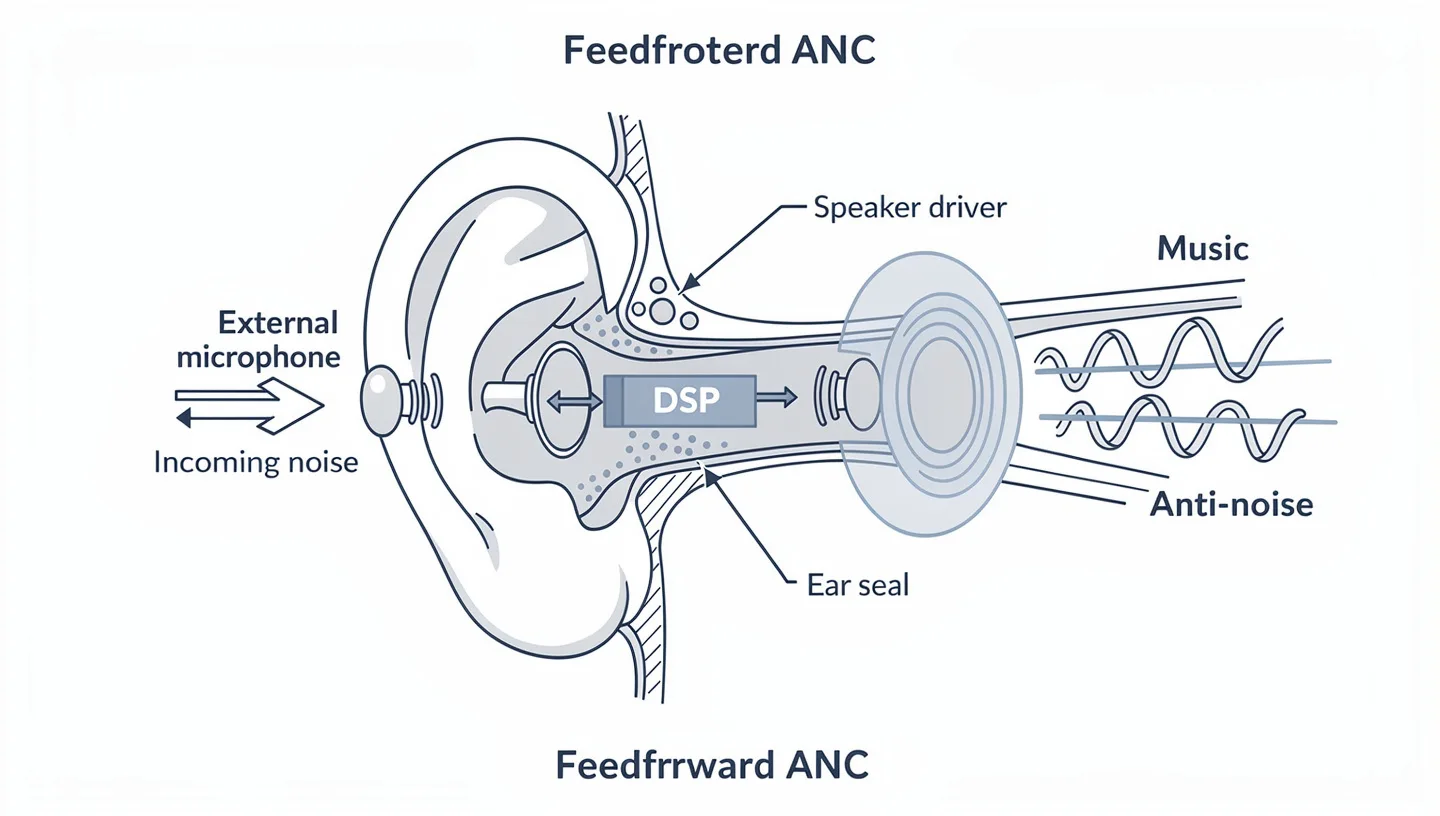
For mid-frequency sounds, external microphone placement offers the best noise sensitivity. Specific sounds like speech or environmental noise can be isolated by the system for more advanced control. External noise to what the user hears inside the headphones gets mapped by a digital signal processor.
As accurate as placing a mic inside the ear cup, it’s not, however. Based on fit, noise canceling properties change between wearers. High-frequency noise may be allowed to bleed through by a loose seal, which the processing can’t fully account for. More sensitivity to wind howl and other unpredictable sounds also gets shown by feedforward systems. As they are not picked up inside the ear cup, these may actually get amplified rather than canceled.
Feedback ANC
Inside the ear cup or within the wearer’s ear for earbuds, the microphone gets located by feedback ANC. A new set of difficulties gets presented by picking the right place within the ear cup’s interior.
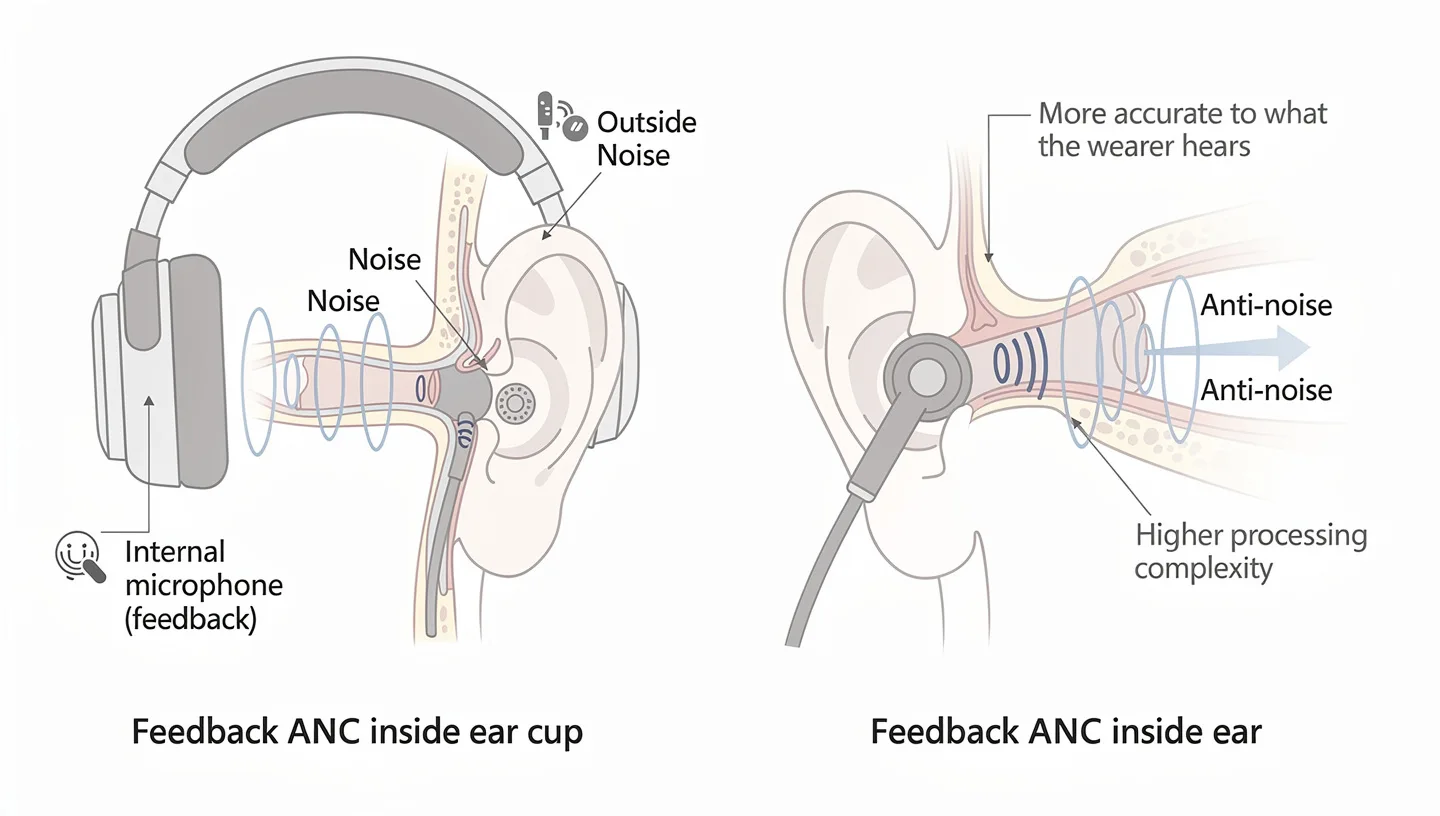
The noise the wearer actually hears, regardless of exact positioning and fit variations, gets more accurately reflected by noise captured by the microphone. That’s the major benefit to feedback ANC. As a self-correcting mechanism, you can think of feedback ANC. More resistant to wind howl, this also makes the headphones.
Some sensitivity to higher frequencies can be lost by devices with internal placement. To reach the internal microphone, less high-frequency sound passes through the physical housing. With feedback systems, processing complexity increases. The user’s audio along with external noise gets picked up by the internal microphone. For the headphones’ frequency profile when worn, this requires filtering and correction.
Runaway amplification can occur, as with all feedback systems. Its own anti-noise signal can be picked up by the system and the level of amplification can increase in a bid to cancel it out. There’s a small risk of this. The amount of noise can actually be increased or even a ringing feedback sound can be produced. Very rare, but in models that don’t take adequate precautions, this can happen.
Less processing time also exists with the feedback design, as on audio already very close to the ear, it’s working. At low frequencies, which have longer wavelengths the system can track more easily, feedback ANC is most effective as such.
Hybrid ANC
Feedforward and feedback microphones and processing get combined by hybrid noise cancelation. To cover all the bases, it combines both approaches, as you may have guessed. The best of both worlds gets offered by this.
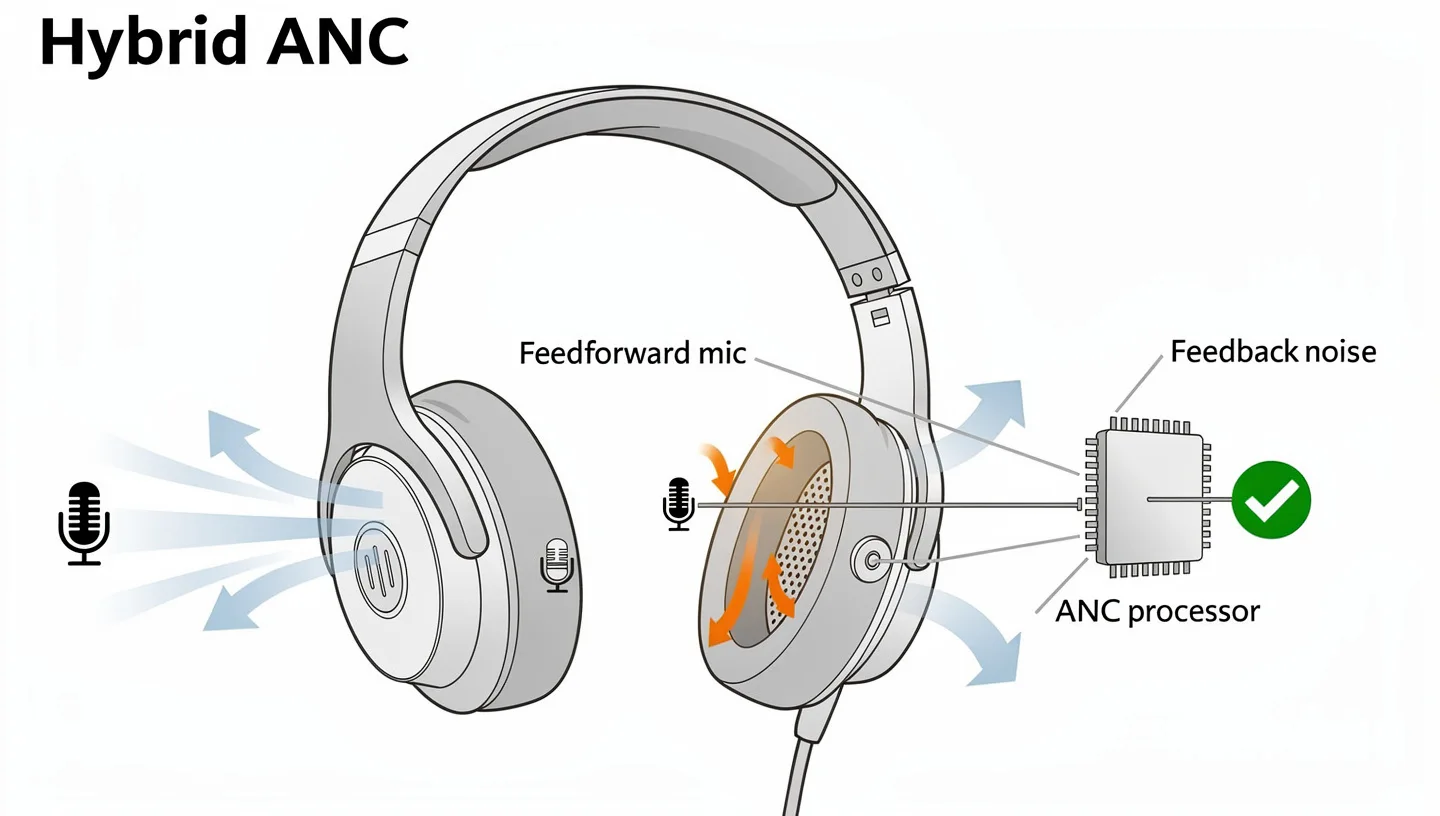
Across a wider frequency range, superior noise attenuation and lower chances of feedback issues get received by you with hybrid technology. For ambient noise pass-through and sound isolation features, the system can still function while benefits of accurate, tailored cancellation get retained.
More expensive to manufacture is the drawback of hybrid ANC. Not only are there two microphones but to avoid introducing extra noise, these microphones need to be of high quality. The additional math gets handled by more powerful dedicated hardware. To maximize the system during development, extensive frequency and performance testing also gets conducted by developers.
The premium headphone market segment gets made up by these products. The best quality ANC available gets delivered by the investment.
Adaptive ANC
With adaptive noise canceling, some newer headphones take things further. Depending on your current environment, this mode automatically adjusts the noise-cancelling effect, as the name suggests. Without you doing a thing, all this happens. So that you don’t audibly notice big changes, ANC levels get adjusted organically by design.
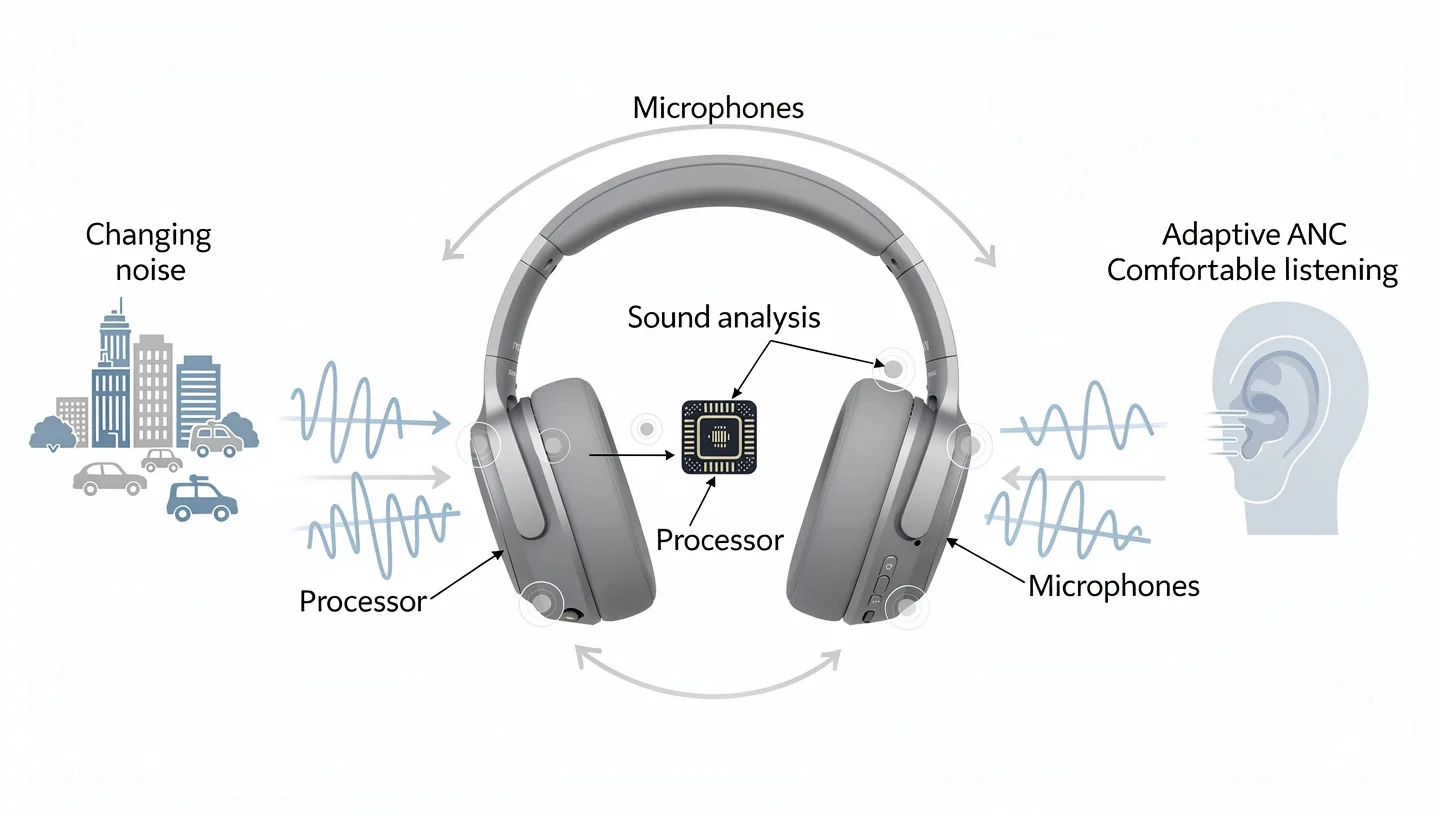
By different names, different brands call this function, and slightly differently, they all work. Those incoming sounds get analyzed by a processing chip inside the device. Details like the noise’s volume and timing get read by it. To changes around you, the ANC system always adapts.
To pick up external sounds, a larger number of these small microphones actually get used by more advanced noise-cancelling headphones, in a bid to more accurately determine which sounds need to be cancelled and which you might want to still hear.
Passive Isolation vs Active Cancellation
A physical characteristic gets described by passive noise isolation. Since day one, closed-back headphones have delivered this. With a better soundtrack, headphones are just earmuffs. Unwanted sound gets kept out by the simple act of covering the ear canal. Against high frequencies, that’s most effective.
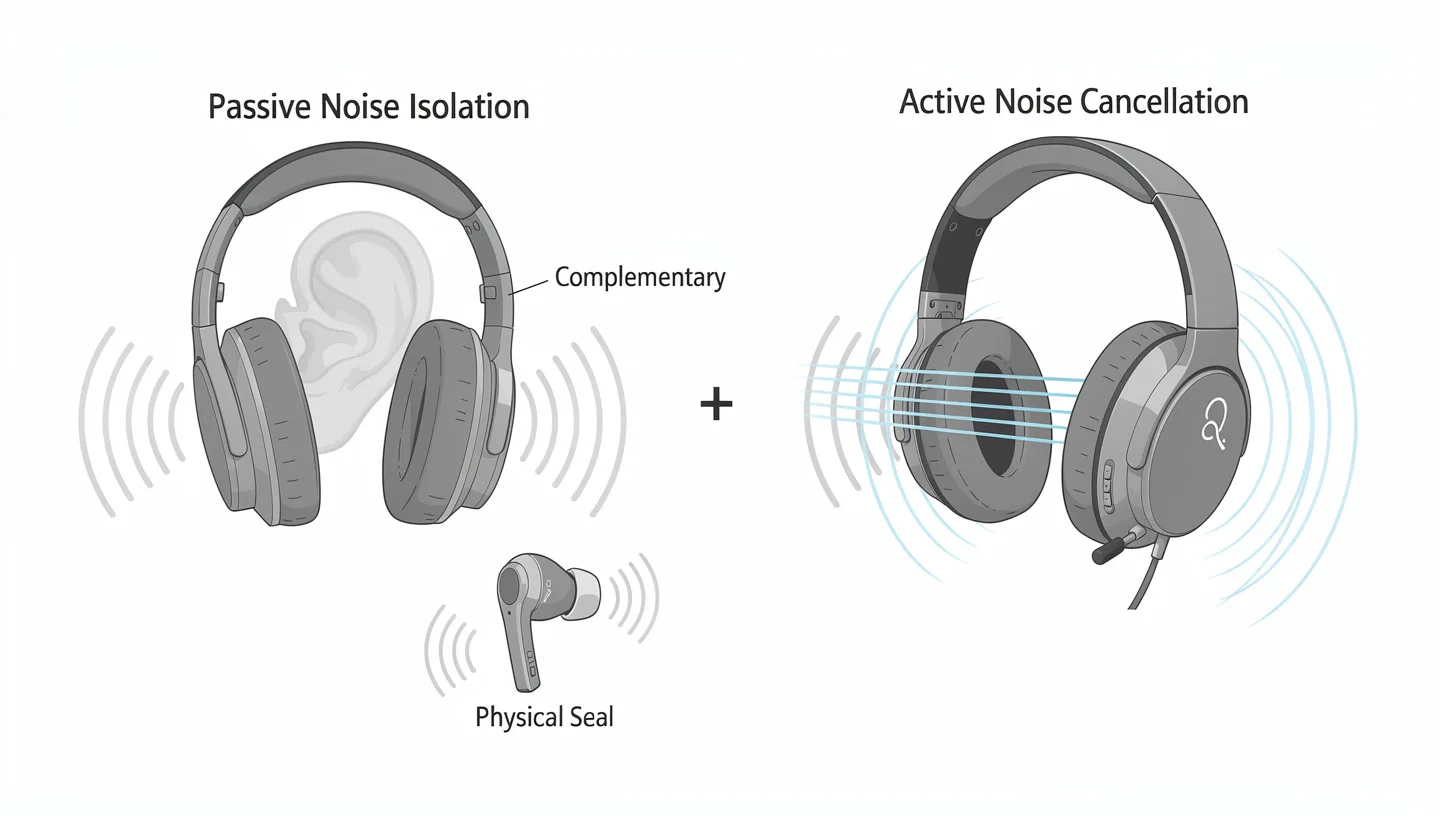
To passive isolation, many aspects of headphone design contribute. How much sound physically blocks before reaching your ear gets affected by earcup style, padding materials, in-ear seal quality, headband clamping force, internal dampening, driver housing shape and materials. For example, compare the passive isolation of closed-back over-ears versus earbuds.
Requiring power to work, active noise cancellation is an electrical feature. At a faster rate, wireless headphones‘ battery drains when activated. Beyond what passive sealing achieves alone, this technology leverages processing to improve environmental extremes that headphones and earphones can combat.
Significantly, the noise you hear inside and outside headphones differs. Between headphone types, active cancelation quality and capabilities get substantially changed by this difference in sound capture.
Actually complementary to one another, active and passive noise cancellation are, despite using different approaches. The sounds that still make it through can be canceled better by ANC technology when you can passively block more sound.
When ANC Works Best
When noise is low in frequency and constant, ANC headphones work best. Still breaking through are sudden occasional noises. Too quickly for even sophisticated systems to analyze, invert, and cancel in real time, sharp sounds occur.
Challenges get posed by high-frequency sounds as well. Harder to track and neutralize, making them, shorter wavelengths change faster. Where they can be most effective, most ANC systems focus their effort on low and mid frequencies.
Considerably though, the technology has advanced. As processing power and algorithms improve, modern implementations come very close to effective cancellation. You won’t see 100% cancellation, but to a fraction of original volume, between 20-40dB of typical noise reduction cuts background sound.
When ANC activates, pressure sensations get noticed by some users. Air pressure in the ear canal gets slightly affected by the anti-noise signal, because this occurs. Not harmful, but for certain people, odd or uncomfortable it can feel. With the sensation of ANC, some people never get comfortable.
Why Use ANC Headphones
More invaluable, active noise-cancelling technology proves with modern life being more frenetic and noisy than ever. Your music uninterrupted gets let you hear by ANC headphones, by muting the outside world. On tasks in near silence, they allow you to zero in and focus.
Significantly, audio clarity improves. Without turning up volume to compete with external noise, you can hear detail. A more immersive listening experience gets resulted in by this.
Your hearing gets protected, more importantly. To further improve the environmental extremes headphones and earphones can combat, technology is being leveraged now. Your hearing gets permanently damaged by no more continually jacking the volume. At quieter, safer levels, listening happens because you’re canceling noise rather than drowning it out with higher volume. For extended use, less tiring.
Long-term hearing health can be helped to preserve by an effective pair of noise canceling earbuds. For those who travel frequently or commute, ANC headphones are a great option. Dramatically, background noise on public transit or aircraft gets reduced. Mentally, less draining, this makes long trips.
Especially in noisy environments, focus and productivity can be significantly enhanced by ANC headphones. Better on your tasks, they allow you to concentrate by reducing background noise. To improved efficiency and fewer distractions, this can lead.
For various situations, versatile options get provided by many ANC headphones. For various devices and preferences, both wireless and wired ANC headphones provide options. For different environments, cancellation levels get let you tailor by adjustable settings. To suit the surrounding noise levels, optimal performance gets ensured by this flexibility, allowing you to adjust the settings.
Based on detected noise levels, adaptive modes automatically adjust. Your ear canal’s acoustic response even gets measured by some implementations and to your unique anatomy, performance gets tuned.
Shopping Considerations
About their ANC implementations, technical specifics don’t get published by most manufacturers. When choosing headphones, knowing the different system types helps however. High frequencies might not get handled well by feedback-based systems. With consistency, feedforward designs can struggle. Trying a different approach gets suggested by either issue.
Better results typically get delivered by hybrid ANC implementations. They’re not perfect, but current best-in-class performance gets represented by them. When shopping for premium models, look for this feature.
More than anything else, physical fit matters. Even the most sophisticated ANC circuitry gets undermined by poor seal quality. Completely around your ears, earpads need to close for over-ear headphones. To seal the ear canal correctly, proper tip sizing gets required by earbuds.
Without ANC active, maximum runtime usually gets listed by battery specifications. With noise cancellation turned on, check how long the headphones last. You’ll experience the realistic usage time that’s.
To headphones, ANC adds cost. Compared to models without this feature, expect higher prices. Below the advertised maximum, battery life also gets reduced by running noise cancellation constantly.
Into tiny housings, multiple microphones get packed by premium earbuds. Both ANC performance and call quality get improved by these arrays. Whether you’re dealing with over-ear headphones or compact wireless earbuds, the same design principles apply.
Bottom Line
Decades ago, ANC got pioneered by companies like Bose and Sennheiser. Almost entirely wireless, today’s implementations are. Standard rather than exceptional, the technology has matured enough to become.
To function, electrical power gets needed by ANC. The passive noise blocking that comes from physical design elements gets complemented by it. Across multiple frequency ranges, ambient noise gets cut by both methods working together.
Most effectively, constant low-frequency sounds get canceled. More easily, sharp sudden noises break through. Difficulties also get presented by high-frequency sounds. You won’t get complete silence, but your hearing gets protected and concentration gets helped by the reduction. For detailed buying guides on ANC earbuds across all price ranges, check our noise cancelling earbuds guide.
Frequently Asked Questions About Active Noise Canceling
What does ANC stand for?
ANC stands for Active Noise Cancellation. This technology reduces unwanted ambient sounds through electronic circuitry rather than physical design alone. Unlike passive noise isolation, which relies on the physical structure of the headphones to block out noise, ANC uses microphones and processing hardware to actively cancel out external noise.
Is ANC worth it for headphones?
Whether you need ANC headphones hinges on your environment and audio needs. They’re ideal for frequent travelers, individuals working or studying in loud settings, and music enthusiasts seeking an immersive experience. If you mostly use headphones at home in quiet spaces, active noise canceling might not add much value. The passive seal of decent headphones is probably enough.
Does ANC reduce sound quality?
Some people believe that active noise cancellation can degrade sound quality. However, this is not always the case on high-end models. While this can affect the tone of a headphone, digital signal processing has progressed to the point that any shifts are compensated for. The best models available now largely avoid this pitfall, but we have often found that when the active noise cancelling has been poor, the audio quality as a whole has been sub-par, too.
Does ANC work without music playing?
Most ANC headphones will stay on and allow you to enjoy the silence without any signal being applied. You can use the noise canceling headphones to give you silence without having to play music. Many people use ANC headphones with no music playing, just to create a quieter workspace.
Do all wireless headphones have ANC?
No. While active noise cancelation appears across a decent selection of earbuds and wireless products, not all implementations are equal. ANC technology is no longer reserved for the most expensive headphones, but it’s still not a basic feature across all wireless models.